


Now, after awakening and seeing how strangely the events that occur daily are no longer inescapable consequences of a historical development, but ineffable problems predicted more than a century ago by the thinkers who inhabited Austro-Hungarian Vienna at the turn of the century, we might understand why a struggle rages within us, revealing the meaning of dwelling. It is no more than returning to the themes that inspired this Viennese generation to see how they become as topical, as real as what we can imagine was happening on the streets of Vienna. The long-assured happiness that progress and the Western world had promised us through democracy, capitalism, and modernity then collapses in our consciousness, like a house of cards. We are on the brink of a void that leads us to self-exile from the world. From a world characterized by dehumanization, loneliness, and the establishment of technology as constitutive of the world.
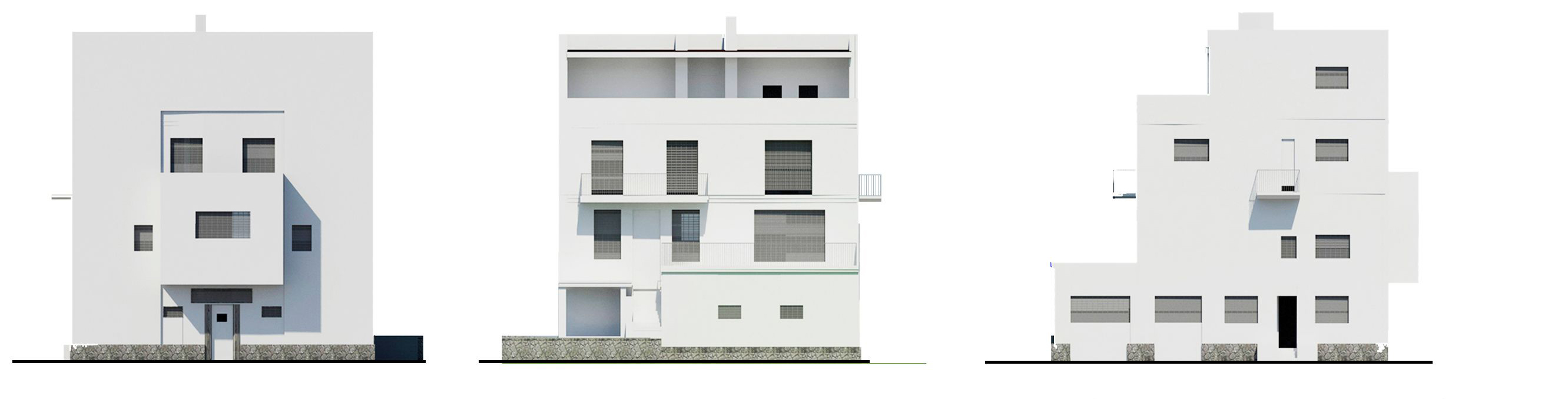
A house that leads us to discover the uninhabitable world, the world of names, of images. The house represents the house like Magritte’s pipe. This world that Rilke mentions in The Duino Elegies? A world where the tree is no longer a tree.
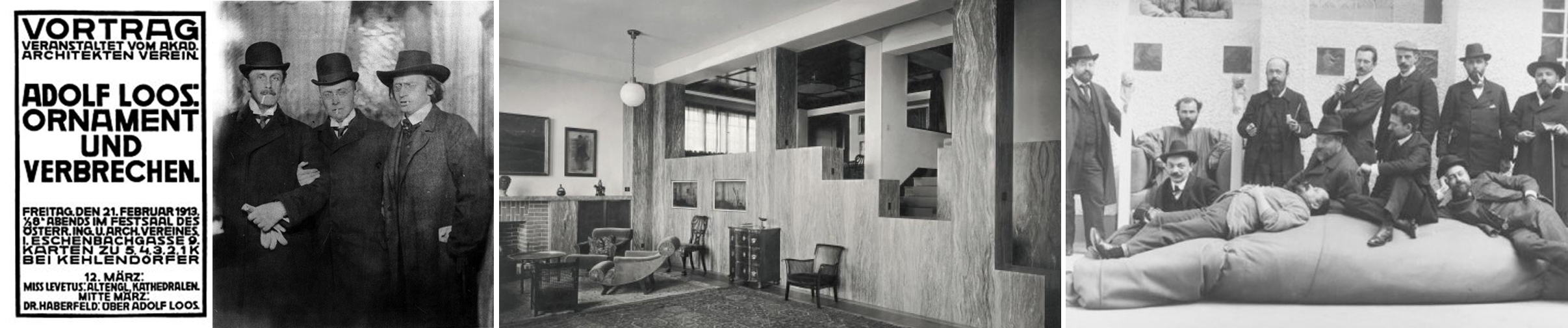
A world that Wittgenstein tried to show, limited by its own language, for it was this that constituted it. A world of images where these Viennese saw the cause of their passions every day, against which they struggled in their work, in a battle against moral and aesthetic degradation. It was a struggle against the value of things in images, against the applied arts, against ornament in everyday utensils, in architecture as a city, in language, or in music. A struggle that is taking hold, and which is in itself the crisis of Western culture; it surrounds us daily and affects the development of our lives.
Our reason chooses the dialectical path, for it thus creates a logical structure in thought; and thus allows us to link question with answer. Perhaps, after all, I understand that it’s not necessary to find answers, but rather to ask questions. Isn’t it time to finally ask ourselves, what did this cursed generation of Austrians mean?
Why does the end of the Viennese century (19th century) feel so relevant (20th century) and (21st century)? How did a century pass without understanding what an entire generation warned about, and which would become one of the darkest centuries of humanity?
Si quieres saber mas de esta historia, continua leyendo aquí.
Si quieres saber que dejaba por fuera el lenguaje, pasa al siguiente link.
Si quieres conocer mas de la generación Vienesa, pasa al siguiente link.