

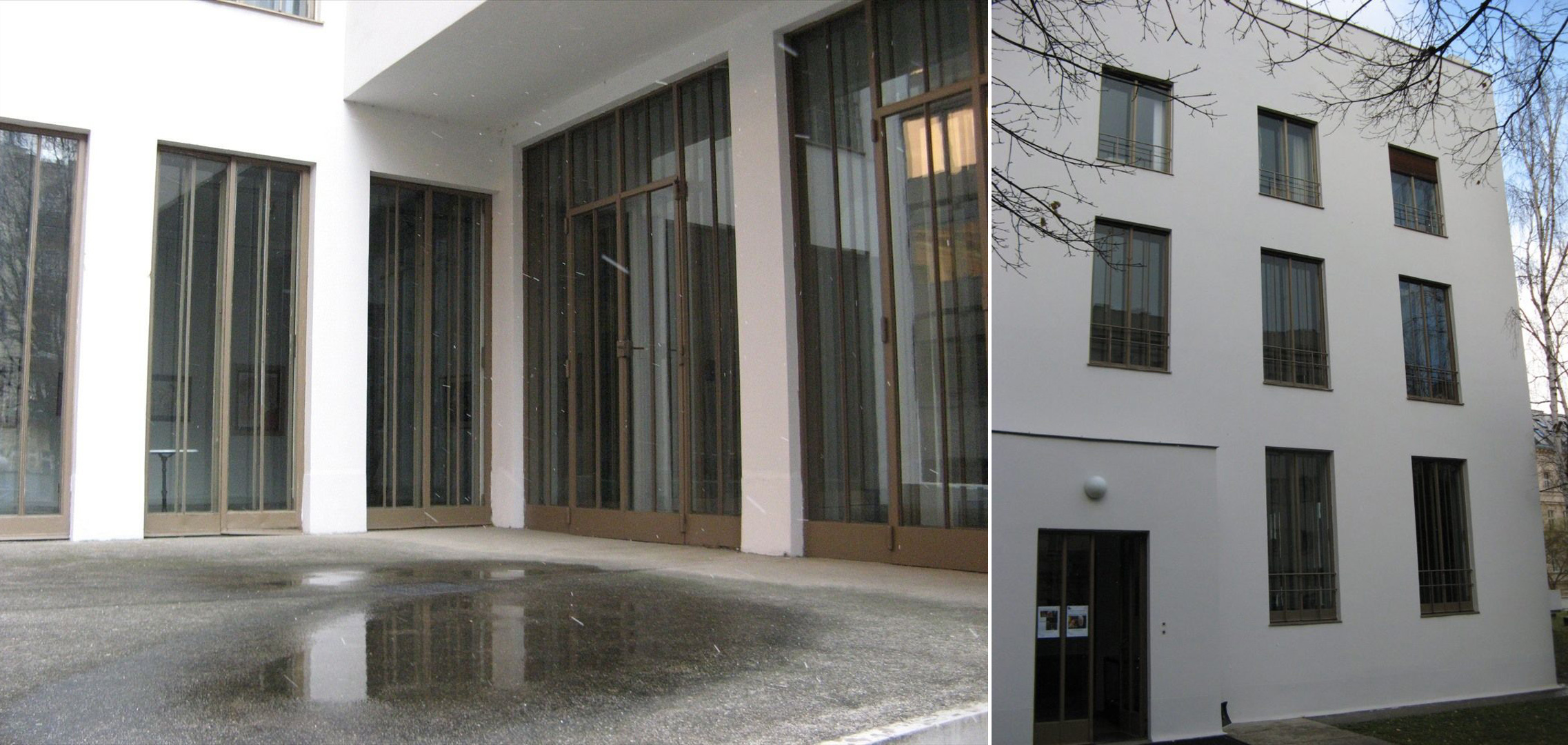
It’s located in the third district, and precisely as the guidebooks at Kundmanngasse No. 19 conscientiously state, it’s the famous house built in 1926 by Paul Engelmann for Wittgenstein, who collaborated on the architectural project. Upon arrival, it seems as if the house, which Wittgenstein had built for his sister, doesn’t exist, because the street runs from number 13 to 21, skipping the numbers in between; the streets are raised, interrupted by seemingly abandoned construction sites. With some effort, one discovers that the house is on the other side, and that the entrance used to be via Parkgasse. The building, with its nested cubic shapes and its dirty yellow-ochre color, looks like an empty drawer. It now houses the Bulgarian embassy, which occupied and restored it in the 1970s, and its cultural section. It’s six in the evening, the door is open, and a few windows are lit, but no one is in sight; on a veranda, a table with four upside-down chairs sits. The garden is dominated by two large bronze statues of Cyril and Methodius, the two Slavic saints who were obviously not placed there by Wittgenstein.
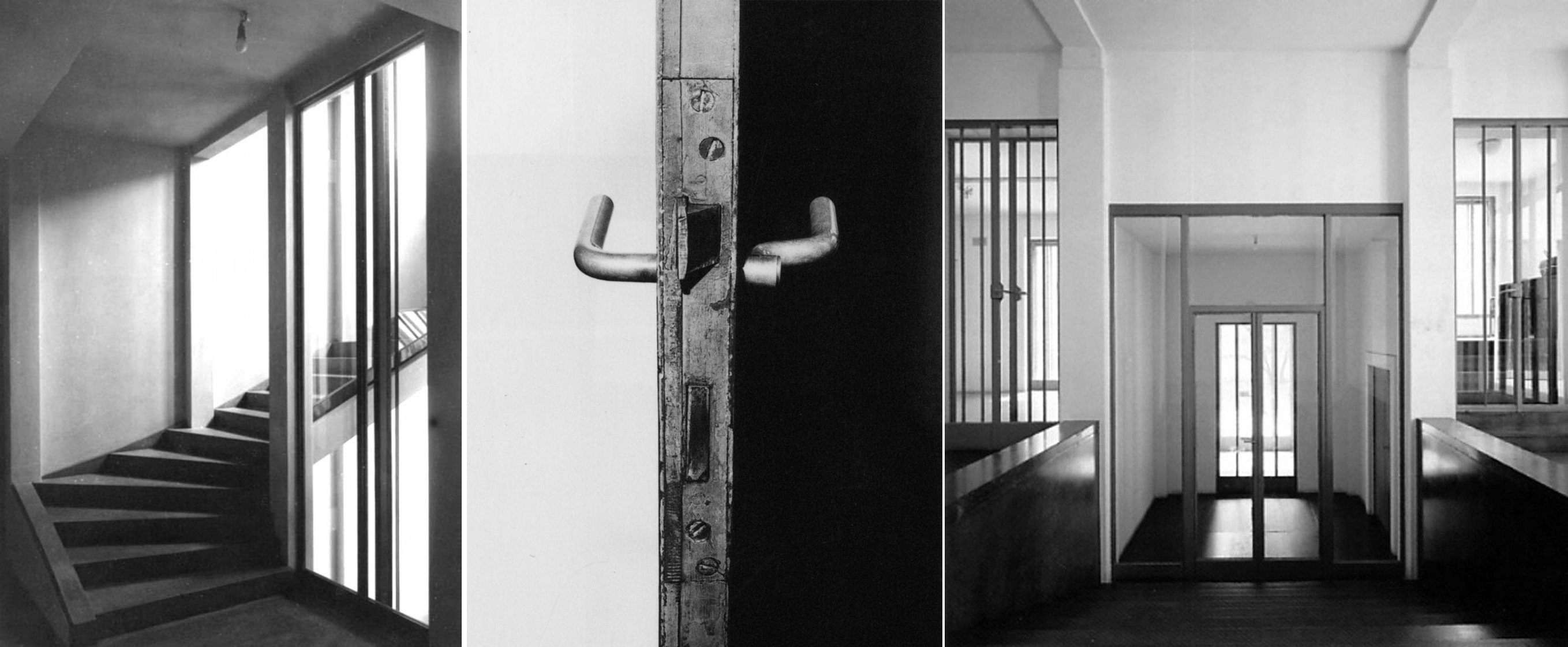
The geometric rationality of these architectural forms, desired by the philosopher who so relentlessly explored the possibilities and limits of thought, now seems to reveal, in a dry manifestation, a heart-wrenching futility. We wonder what Wittgenstein intended with this building, whether he wished to build a house or proof of the impossibility of a true house, of what was once called a home. Who knows what limits these square forms ideally sought to draw in their thought, what ineffable spaces and images they must ascetically exclude, leave out.
What could Wittgenstein have wanted to leave out? Why is a house no longer a house? At what point did it cease to be the home, the archetype, the way of inhabiting the world? These answers make no sense if we ourselves forget the matter and inhabit the image of the world. Because the house, before we were born, and even before any person we know was born, was the dwelling place of our body, in an indistinguishable world. The house limited familiarity and was the measure of the world. A house founded on sacrifice, on transforming fire, which, turning into smoke, transmitted its message to heaven, to the gods. Smoke as a link between heaven and earth, like fire in the hearth. The bonfire. The house taught me the inside and the outside. But the subject locked himself inside and believed he had found the freedom to be. He left his identity, his memory, in his objects. The house enclosed nothing. The house, the original way of inhabiting, was lost to history. A house that inhabits and shapes myth. The myth that reason seeks to forget. Wittgenstein’s house is the House of Correction. The cone is modern rationality, and its inhabitants are all of us.
Si quieres saber mas de esta historia, continua leyendo aquí.
Si quieres conocer de la casa del mito pasa al siguiente link.
Si quieres saber de que se trata la novela corrección pasa al siguiente link.