

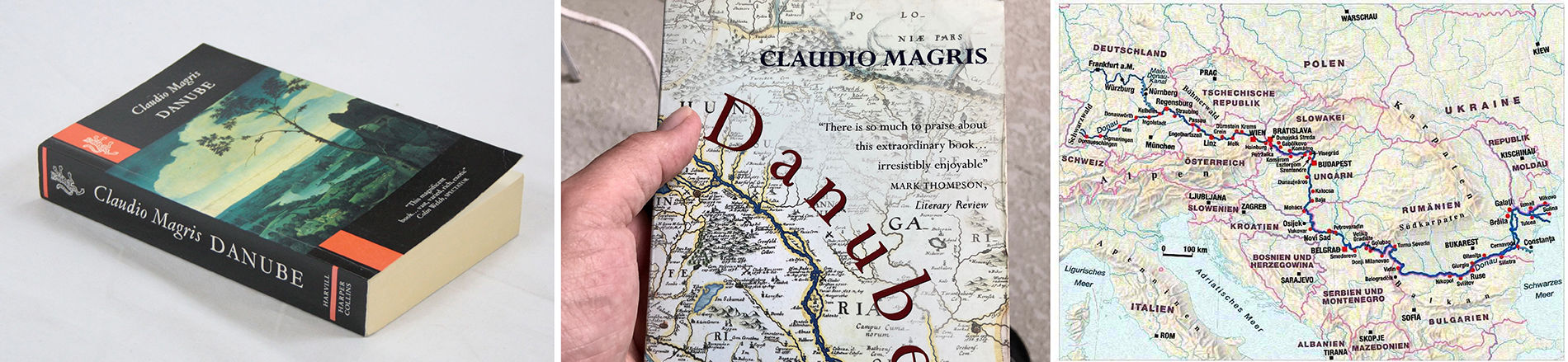
By rediscovering the forgotten world that rose behind the name of an empire on the empty crown of Franz Joseph, reflected in the image of today’s world, the doors are opened to us that lead us to unearth the truth so cleverly hidden by history. The truth that these illustrious and desperate Viennese wanted to tell us in silent cries. Musil, Krauss, Loos, Wittgenstein… in short, a list that extends to everyone who shared a conversation in a café near the Danube, Magris’s Café Central on the Danube.
And among so many stories of coffee, of brown, this story frames the common thread of these Viennese. The story is the story of a house, of its planning and construction. Of the house Wittgenstein built for his sister Gretl at Kundmanngasse No. 19. This is also the story of a book, masterfully narrated by another Austrian, Thomas Bernnhard, in the novel “Correction.”
The story is about an idea as Platonic as a cone, an idea that must be put into practice to prove its impossibility. An idea that would challenge the tradition of construction and the laws of physics. The construction of his sister’s house. The creative need that comes with transforming this idea demands a process of continuous and perpetual correction. Correction because everything said, done, and thought is a falsification subject to correction. And correction is another fallacy committed to the same process. Behind this continuous correction lies the confrontation of contemporary man with the world. There is Wittgenstein’s thought, and his vision of a world made up of facts, not things. And what better example to speak of this philosopher’s way of living than a house, designed by him as a residence for his own sister. Wittgenstein said of the house…
. . . . The house I built for Gretl is the product of a decidedly sensitive ear and good education, the expression of a great understanding (of culture, etc.). But the primordial life, the wild life struggling to come to the surface… that’s what’s missing. So you could say it’s not healthy.
. . . . Surely we understand what was missing, what struggles to come to the surface, when we hear what he said at another time: “Within all great art there is a wild animal: tamed.” This wild animal, who has been tamed by the world, is missing from this house. The inhabitant. An animal tamed by the world, like his sister Gretl, or like Melville’s Bartleby, or like the individual who works at Loos’s Chicago Tribune, or like any of us.
Si quieres conocer de la casa de Wittgenstein, continua leyendo aquí.
Si quieres saber sobre el lenguaje en Wittgenstein, pasa al siguiente link.
Si quieres saber que faltaba en la casa de Wittgenstein, pasa al siguiente link.