


Film has been one of my passions for as long as I can remember. During my childhood, movies and books fueled my imagination and became the refuge where I spent, and continue to spend, many of my free time. Even though it wasn’t my professional choice, film chose me. I’ve been making images for over 20 years. I’ve been a producer, director, filmmaker, editor, and finally, a production designer. It’s my life, and despite being a theoretical person, I’ve spent years practicing in film and image production. Film is my job, and I’ve covered a wide range of professions.
Film is my job. But my job has often disappointed me. Due to my personality traits and my approach, art direction and production design are the fields I ended up specializing in. I mix a bit of architecture in set design, interior design in setting, and a bit of industrial design in prop design. It’s also a bit of industrial design in prop design, just as costumes acquire a fashion concept. Makeup and special effects are also an element of style and innovation, often bringing absurd tasks to life in tight timeframes with paltry budgets. But the disappointment doesn’t stem from this. In fact, creating has nothing to do with budgets, and in fact, many of the best things emerge from the inventiveness generated in austerity.
The disappointment comes from the way we view this craft. I have witnessed the growth of the industry, from the Focine shorts of my adolescence to the creation of film laws that strengthened the film industry, nearly going from making two films a year to more than 50 in recent years. I grew up in the television industry. I saw how soap operas—a product that Martin Barbero exemplifies as the standard-bearers of Latin American creation—migrated from Mexico and Venezuela to Colombia. I saw how, following the establishment of industry unions in these countries and in the United States, they professionalized the craft; the major production companies turned their attention to Colombia. Telemundo, Sony, Fox, and even Netflix and its production model found in Colombia the professionalism and commitment of our crews, attracted by the 15-hour workdays and pay well below cost. I saw and experienced the double billing of RTI, worked on soap operas, reality shows, documentaries, one-offs, and specials. I did everything from public projects to private commercials. I worked long hours and often risked my health due to the conditions under which producers resolved the financial issues to move filming forward.
But this is part of the industry. Of its professionalization and specialization of filmmaking. The disappointment isn’t tied to these realities. Even in art direction, one of the main problems of what it means to practice my profession lies. Namely, we all live in a home, dress, and style our hair in the daily routine; so even the human resources manager and the accountants have an opinion on how I should do my job. Everyone has an opinion about the taste and the requisites of the image. But no one reflects on it, and their judgment is self-referenced. My job is literally to put myself in someone else’s shoes, not as an actor but as a character, and to inhabit their world to construct a cosmogony. We know very well that Colombia is not characterized by knowledge of others and respect for differences; rather, it is by the imposition of one’s own vision on others.
Even in a country marked by indifference and a lack of empathy, my disappointment does not stem from this. My job is a professional one, not a technical one. I am an architect, a specialist in multimedia creation with a master’s degree in arts. I have diplomas in documentary production and special effects. I have researched cultures as an anthropologist would. I have delved into all the nuances of the art department. And yet, the technical crew on set still believes we’re the ones who move the sofa so they can set up their lights, or even that we’re the motorcycle messenger ready to quickly deliver whatever the director comes up with on set. No. The disappointment doesn’t come from this; it’s part of the package.
And what is truly disappointing is seeing how in a country where former presidents escape with flying colors with their immunity; evading homicides, corruption proceedings, and even criminal charges for embezzlement of public funds, rape, and fronting; where public officials accept bribes as deserved commissions, and perform their work with a mediocrity that would astound even Bartleby. The disappointment does not originate from this cancer that we carry in our DNA from the elegant Spaniards who conquered us. The disappointment is seeing that everyone. Rich and poor. Men, women, and transgender. Bosses and employees. Teachers and students. Peasants and citizens. Everyone, absolutely everyone, allows our rights to be trampled on. We do not exercise the right to protest. We all look the other way when we see a robbery, and we even overlook our own faults, which we reward as indigenous malice. Our wars have made us immune to empathy. We privilege our own reality over that of others, and the selfishness of “you don’t know who I am” destroys any capacity to build a society. Our narco-paramilitary state and godlike society boasts of its inquisitive virtues. The Catholic double standard permeates the possibility of recognizing ourselves in others, and not even soccer can save us from that. We are infected with selfishness, and that will not change. We are the clear example of the human condition, and this is our social destiny.
But what does that have to do with cinema? Well, everything. Cinema is a reflection of our reality. Even the films we’ve made in recent years are influenced by two things. The cinema fonds, which generate festival films where 30,000 spectators in Colombia see them, and the audience of the first intellectual world, feel that by seeing the realities of the conflict and of marginalized minorities, they fulfill their ethical quota of being informed and aware; Or, on the other hand, the small-town caricatures that portray Colombians as funny, cruelly struggling to cope with their problems at home, in the neighborhood, or at work. These D-class films don’t require any major production, yet they fill Colombian movie theaters and entertain on Caracol Channel’s holiday specials.
We laugh, we mock each other, or we simply expatriate them to the reality beyond our cities. The peasant is so distant that not even the market we sell our polished potatoes at Éxito reflects the land and blood with which they were planted. Cinema is complicit, and protest is often silenced. Protest documentaries are excluded from our gaze, while entertainment has us anesthetized. I have participated in films that speak to this and are excluded from the mainstream because of their intentionality. And not only that, producers use the film law as they please, and state support dissolves into robbery of workers and becomes festival travel expenses.
I witnessed how Claudía Aguilera and Gustavo Pazmin, working for proimagenes , turned the film law into a way to steal public money. I worked on the FDC -winning film, “El silencio del rio” (The Silence of the River), by IGOLAI producciones, to which I wholeheartedly dedicated a year of work, but I wasn’t paid for it. I even saw how Gustavo robbed the field extras who starred in scenes as extras of their dreams of telling their stories while he kept the promised wages. But these producers didn’t just steal my work and that of many others. No. Gustavo traveled to Berlin and Cannes, and toasted with whiskey at co-production markets with the money from my fees. He was so ingrained in his obsession that he even sold my credit as an art director. I even went to court and won against this company. But like everything that’s judicially purchased in this state, the company didn’t pay and continues to win awards.
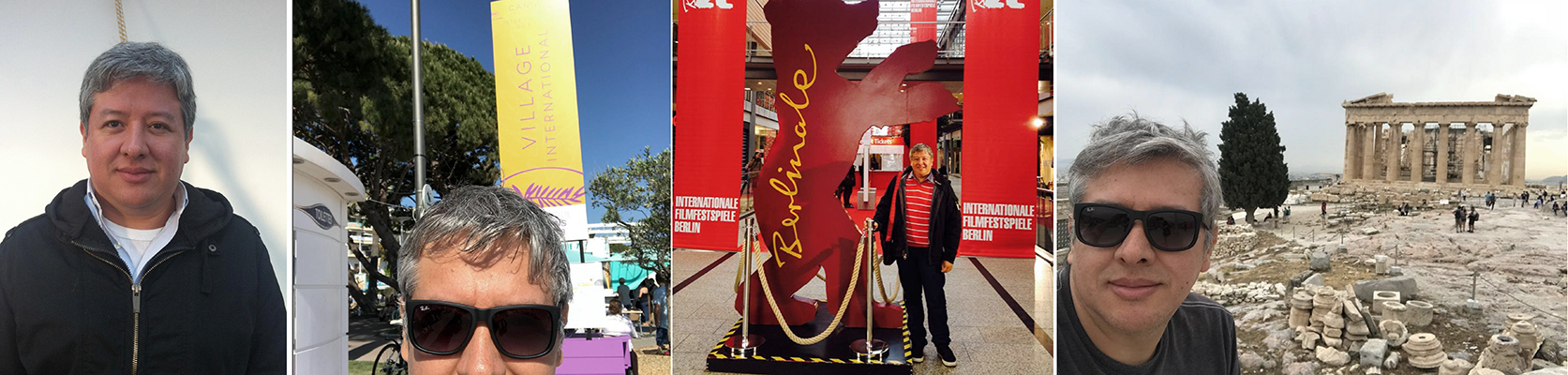
This process wore me down for years. For the first time, I had to hire a lawyer. We drew up a document to seize the box office, and I even asked him for a letter of public apology for all the damages caused as a result of his actions. But impunity is part of our social fabric. And Gustavo Pazmín continues to steal. He even went so far as to use money from other films to pay off debts from other productions. In Víctor Gaviria’s film, “La mujer del animal,” he paid the makeup artist a debt for fees and food that she had owed since we started pre-production. These are the producers who trample on each other’s work while making films to show at festivals. The film even won the Cartagena Film Festival, but not even the letters and lawsuits that all those involved received helped to stop the skillful Gustavo from continuing his criminal career, toasting the world as a successful film producer.

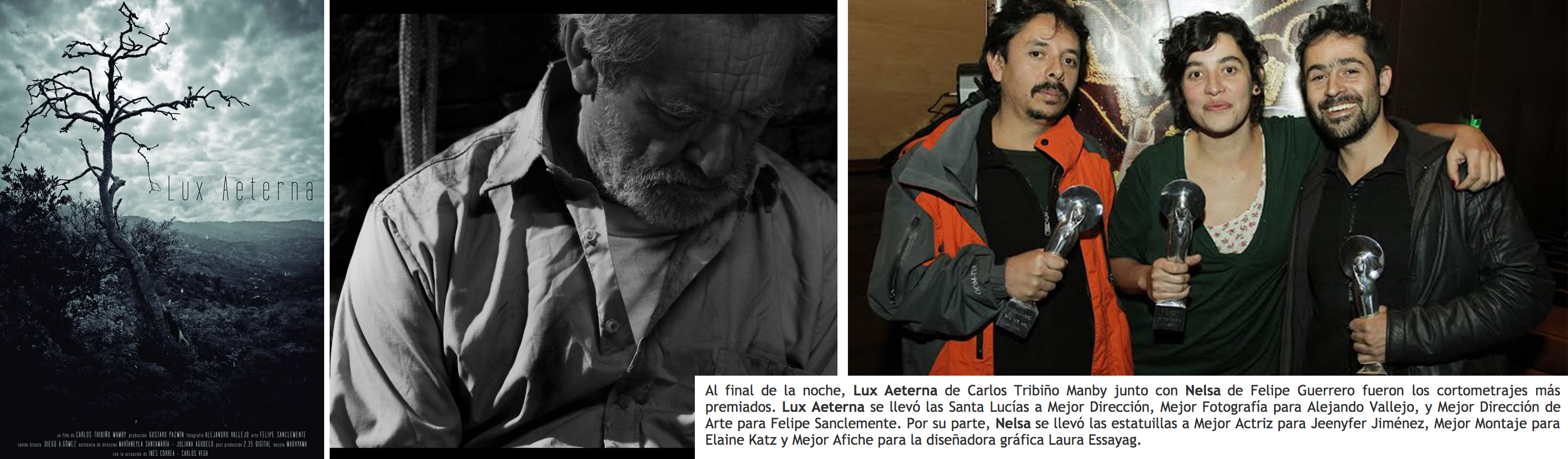
His nerve was such that at Bogoshorts, when “Lux aetherna,” the short film I had worked on for free so that its director, Carlos Triviño, could access co-production with France, had to present a previous work of fiction, we filmed this short film that won at the festival; and when it won best art direction, I didn’t find out and when I received the award in the auditorium they came up to get me, saying that I was out of the country.
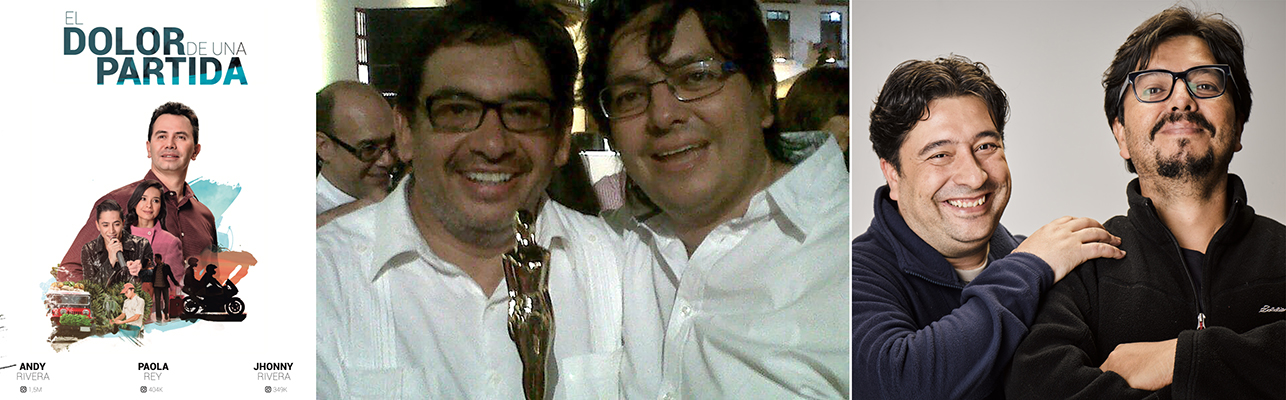
I was robbed by a Venezuelan who came to write a soap opera; I was robbed by garage production companies, and I was even robbed by my great friend Arleth Castillo, a successful Caracol screenwriter and winner of the India Catalina Award and recognized for his biographical novels. And that’s how our industry works. Arleth, whom I met when he wrote “Oye Bonita,” became a great friend. I made free pilots for him to build his production company. He even contacted me to make a film about the life of popular music singer Johnny Rivera, “El dolor de una partida” (The Pain of a Departure); I did the production design and a teaser for it. I worked for three years, and when it was time to pay me, just as filming began, he disappeared without a trace, and Johnny, who earns 50 million an hour, quietly backed out when it came time to pay my fees.
In short, filmmaking is a team effort, and just like the students I had at Congo Films School, who excitedly asked me about my craft, I was sadly forced to answer: “Work on technique because you will never be valued in art.”




Has hecho una radiografía, un TAC, ecografía, como dirían lo especialistas en imágenes diagnosticas (irónico ya que somos profesionales en imágenes) de todo el medio audiovisual en Colombia, no solo del cine. Habrán quienes digan qeu tienes una visión pesimista del cine, yo considero que tenemos que desnudarnos, ajar esa envoltura hermosa en la que nos regocijamos los que estamos vinculados al cine, porque estamos muy acostumbrados a la alabanza la celebración. Es hora de lavar la gruesa capa de maquillaje con la que nos presentamos en eventos, es hora de levantar el tapete para barrer toda la suciedad que se comete en este medio, es hora de dejar de creer qeu todo vale y que la mediocridad y la falta de planeación o la provisión son sinónimos de genialidad.
Resulta de un “realismo mágico” inesperado, que quienes nos dedicamos al cine estemos yendo en contra vía de todos lo que atacamos, lo que denunciamos, o destapamos en las temáticas de las películas. En este momento recuerdo las palabras de una gran empresaria internacional vinculada al cine quien en medio de una charla privada después de evaluar el cine colombiano me dijo “ustedes están jugando al cinito”