


The approach to all architecture revolves around the boundary constituted by the architectural line. A boundary that separates the private from the public, or the internal from the external. The screen influences this boundary in such a way that the private becomes public as the media enters the private sphere of the home. The screen is a medium that deconstructs the individual’s family and architectural space-time. This disarticulating capacity must be revisited by architecture. That is why television is a vitally important public space in our city. In a city governed by fear and the media, mediated communication processes become real. The public sphere is public opinion.
Fears determine new ways of living and communicating. They reveal a cultural anxiety surrounding the loss of collective roots in cities where savage urban planning constantly destroys the familiar landscape that underpins collective memory. The media is often blamed for homogenizing culture when in reality it is the city itself that produces it. Television replaces any capacity for communication that is lost on the street. This creates a trap that leads citizens to believe that by being informed about what is happening, they feel they are participating and acting, when in reality, the social actors are other, and quite few. This drives people to seek new ways to come together. The relationship with distance imposed by the media has changed relationships in the city. Not only represented in homes, drive-thru centers, and hypermarkets, but also in neighborhood relations.
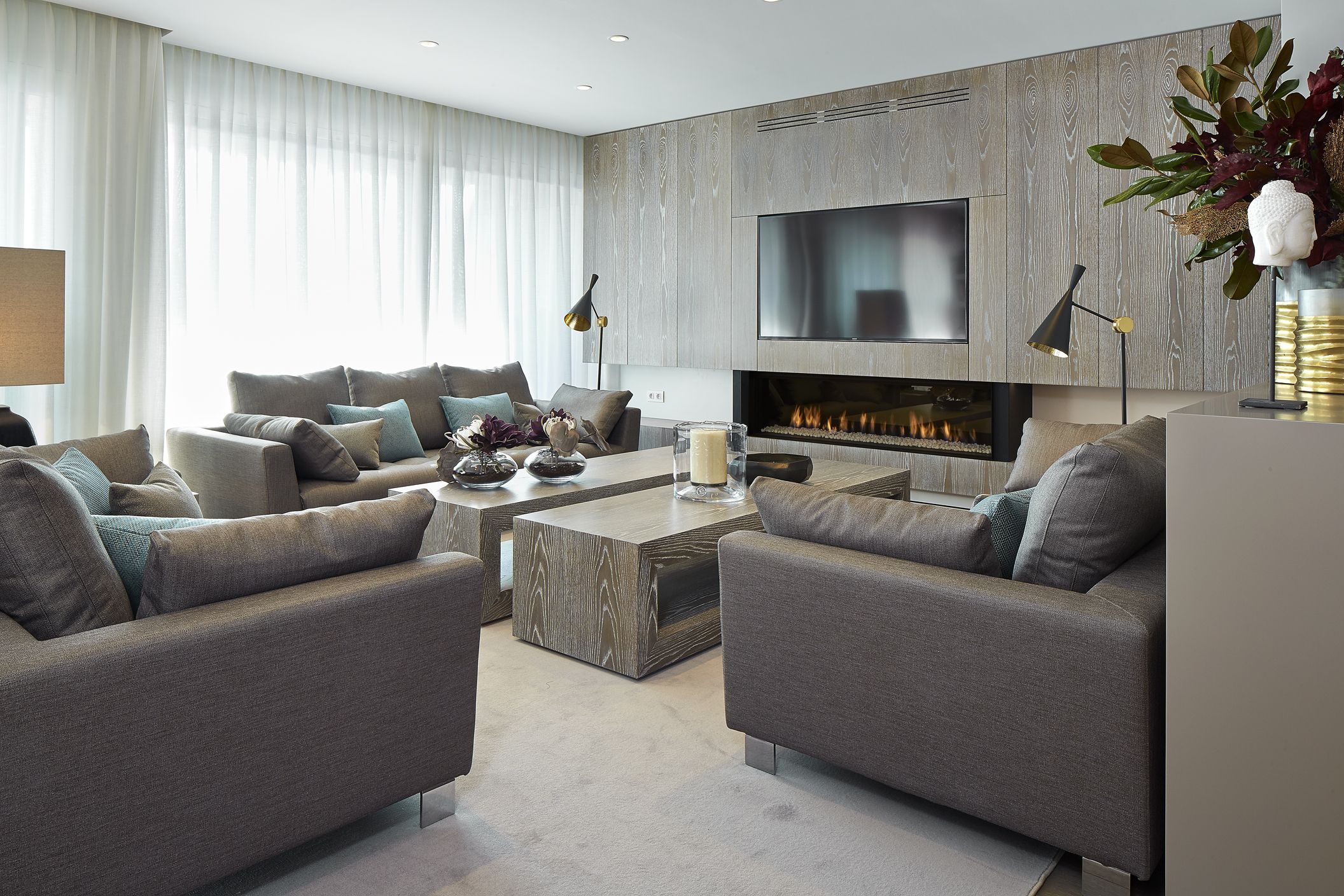
Even the familiarity that the neighbor represented has been modified. Now, closeness is not physical but mediated. It’s not a problem of distance, since one doesn’t have to leave the room to be with a friend. The neighbor is uncomfortable because of his physicality. I reach my friend through a phone, a chat, or a video screen. We even observe the paradox of large multi-family towers, where the greater the number of inhabitants, the greater the anonymity between them.
The interior architecture of housing must have the transformative capacity to disappear around new media, as well as to appear at the time of intimacy that binds us to physical dependence on the body. In the same way, it must respond, through its adaptability, to the difference in personal identity that the home represents. The building, as a collective, is responsible for shaping collective identity in the midst of the architectural debate at the end of this millennium. The question of this architecture becomes the question of where the screen belongs. And what is the scope of the media in our way of living?
Si quieres saber mas de esta historia, continua leyendo aquí.
Si quieres hacer un resumen del recorrido, pasa a este link.
Si quieres ver cual es la medida del habitar, pasa este link.