



To open this text, the initial impulse is a constant feeling of unease. There is something that gives me a glimpse of a very near future where humanity is intimidated by the imminence of dominant technology. It is not a dystopian nightmare, but rather a migration from the biological support of the human to the technical existence of the machine. This radical ontological shift emphasizes nostalgia for what makes us human, and leads us to ask if the machine can transcend this. For me, poetics, and the most sacred relationship between man and the world, are the traits that still distance us from technical existence.
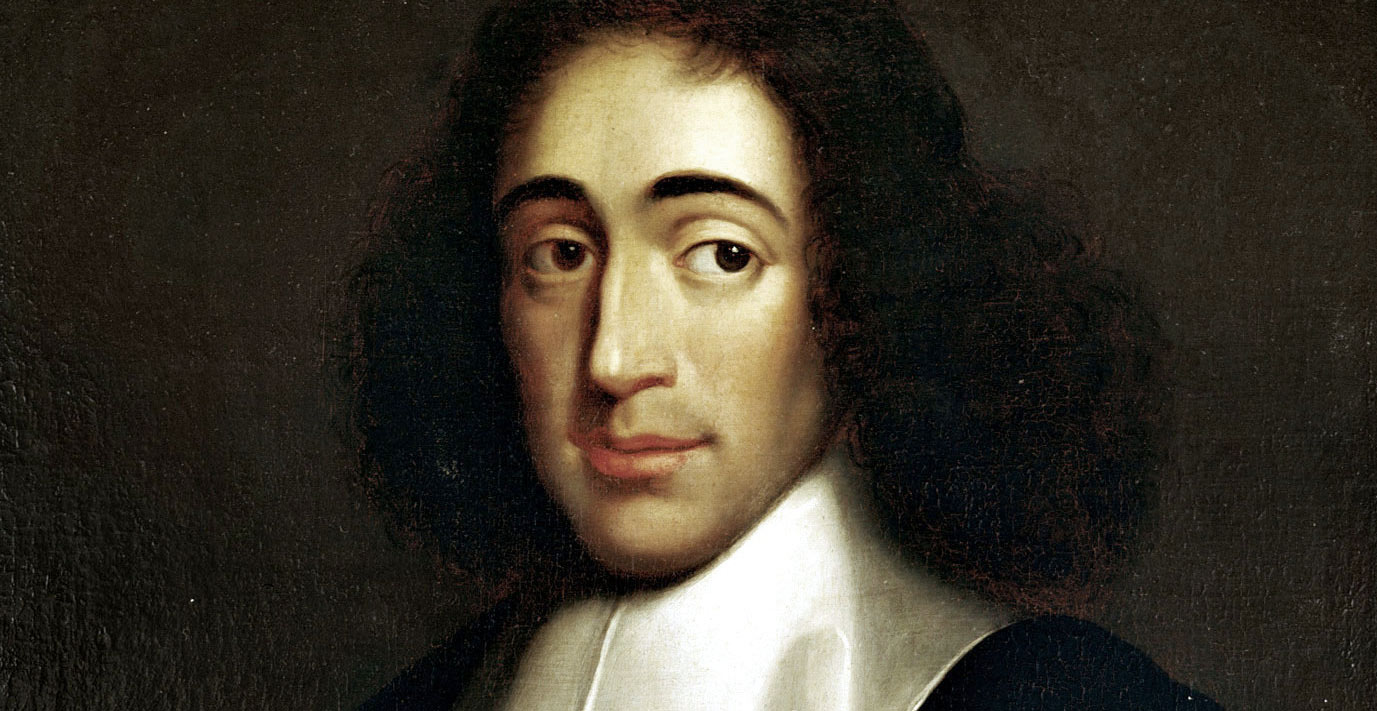
Spinoza spoke of a total God. And this rationalist Marrano was expelled for his pantheistic thinking that despised that classical orthodox God, thinking that everything is God. God is nature. And we are God in that sense, even when this thinking was the seed of rationalism that would distance us from the world in our own subjectivity. For Spinoza, God is revealed as the harmony of coexistence, and not as a personal god who is interested in human destiny and actions. At the time, Spinoza’s Ethics saw a single path, accompanied by science and religion, to seek an understanding of reality.
Reading this note Spinoza made in the 17th century, I see the need to undertake an understanding of technological reality that somehow reconciles technology with nature, and by reconnecting the current dichotomy between these concepts, I believe this is the first step toward thinking about tomorrow. Several scientists and specialists working on the future of technology see the coming change as a challenge. Humans have been developing as a species for around 250,000 years. From the mastery of fire by hunters and gatherers who grouped together in small communities to the transition from gesture to word; These are incredibly radical achievements compared to the other biological species with which we cohabit the ecosphere that is our natural home.
Este pasado de tantos años, fue basado en el aprendizaje colectivo y en la transmisión de la información. Puede que nos parezca hoy en día lento el ritmo
This past, spanning so many years, was based on collective learning and the transmission of information. The evolutionary pace of carbon-based life may seem slow to us today; but in reality, the genetic code learns over time periods much longer than that of human generations. In fact, DNA learns through mistakes or mutations that change and adapt. But the experience of living is only acquired through living, and slowly some of this experiential information is transformed into instinct. But with Homo sapiens, collective learning gradually developed, and we were able to externalize experience in a proto-language that was refined over 200,000 years with each human generation that was born and died.
But something incredible happened 12,000 years ago. And it was a bonanza of energy that came from this human learning, and it was in the valley of the Tigris and Euphrates Rivers where hunter-gatherers domesticated sorghum and wheat seeds for the first time and created the first agricultural system. This was also the birth of technology, which had been developing with the use of tools and which for the first time allowed human beings to create settlements and, with it, the division of labor and the creation of a social structure.
This was the birth of technology and, with it, the fundamental distinguishing feature of humanity. Externalizing experience in language, transforming the living voice into writing, and the ability to form a common space among humans was the great differentiator of the human species, and with it, the birth of a collective learning that exists in the world beyond the life and death of an individual, but rather a living organism that forms itself in this sphere of knowledge that is involved in culture.
But back to Spinoza. As humankind separates itself from nature in its dwelling, As we reference the world and construct it, we separate ourselves from nature. With this comes the invention of God and the construction of wisdom. Through thinking and recording thoughts, this information about the world is formed, which surpasses personal truth and shapes civilizations. For the philosopher, God is the nature from which we separate ourselves. And for him, emotions are expressions of how this dichotomy affects us. I will later discuss the geometric order that Spinoza established for the understanding of human knowledge; but it is necessary to understand that in this rupture between mind and world lies the genesis of human thought. The idea of God is, therefore, to reconnect humankind with nature and return humankind to coexistence in the biosphere.
The acceleration of human progress, of the evolution of the planet, and of the formation of the universe is growing exponentially. And if life seems like an abysmal leap, so does the emergence of Homo sapiens; it is not at all remarkable to see autonomous technology as the next great step from what exists. Based on the evolutionary line, understanding the passage of time as the transition from the simple to the complex, we are just a few years away from hitting the wall. Ray Kurzweil calls it the “Law of Accelerating Returns,” which is the increase in the rate of technological progress. This notion of technology is immersed in digital culture and social media; therefore, technology forms the essential fabric of the technosphere that manifests itself online today. The more advanced a civilization, the greater its growth rate. In this sense, the rate of return between 1985 and 2015 is exponentially greater than that of the decades between 1955 and 1985. And if we develop the mathematics of this law, we can see that the development of the 20th century has equaled that of the first 15 years of the 21st century; and in the last three, we have almost matched the development of the first 15. At this exponential rate, technological growth seems to be quite normal; But in reality, we’re facing such growth in the next 30 years that humanity is facing a technological wall. At the very least, when we see the computing power of AI (Artificial Intelligence), we will feel the same frustration we feel today when trying to explain quantum physics to an indigenous community. They are simply different worlds; incompatible.
Now, understanding this, Spinoza’s thinking becomes relevant to me. It is essential to establish an ethical protocol for programming artificial intelligence, one that goes beyond the vision of the laws of robotics that Isaac Asimov established in his vision of the future. And in what sense is Spinoza’s rationalist thought updated today? For me, the geometric layout he proposed to understand the relationship between the world (God) and humanity (Emotions and Affects) is the starting point for creating an algorithmic pattern that establishes the ethical limits of human thought and separates reasoning from
Now. Understanding this, Spinoza’s thought becomes relevant to me. It is essential to establish an ethical protocol for programming artificial intelligence, one that goes beyond the vision of the laws of robotics that Isaac Asimov established in his vision of the future. And in what sense is Spinoza’s rationalist thought updated today? For me, the geometric layout he proposed to understand the relationship between the world (God) and humankind (emotions and affections) is the starting point for creating an algorithmic pattern that establishes the ethical limits of human thought and separates logical reasoning from the machine.
To this end, I propose a layout based on the normative sciences of human thought: logic, ethics, and aesthetics. Normative is understood as behavior ordered according to a set of laws or norms. In an elementary sense, logic bases its normativity on the dichotomy of truth and falsehood. Hence, logical-mathematical thinking is the foundation of programming and its languages. But when we question the foundation of logic, we find human ethics. That is to say: we prefer truth to falsehood because it is good. Falsehood is evil. But this thought, rooted in human morality and widely studied in Ludwig Wittgenstein’s logical-philosophical tract, leads us to an ethical basis of logic. This criterion of correctness, of ethics, of the correct life for the philosopher, regulates a human life based on the distinction between good and evil.
This philosophical foundation, this normative development of human behavior, disobeys logic and proposes a very blurred ethic. When we consider why we prefer goodness over evil, we can only deduce that goodness is beautiful. This aesthetic foundation of ethics, which follows the line of thought of German rationalism, where beauty is that which pleases without any ulterior motive, allows me to assimilate based on this order of ideas that the search for beauty, in an artistic sense. That is to say: art, is the last corner of the human experience. Thinking about it, in the current terms of technology allows me to intuit that poetics is the instance of human meaning that will separate us from the machine. And this experience of truth, good and beautiful, that we can define in the history of human art: forms the last existential plane of meaning of human experience; and that therefore, it is necessary to share with the thought of the machine, and thus prevent: the fundamental logical thought of human existence in the biosphere: namely: a transitional error where the support of meaning passes from a biological support to its autonomous existence in the sign, where any artificial intelligence with common sense will deduce in the coming years of human becoming.