

To enter a vision of the dreamlike city. The pleasure of my profession as an architect, in which theory is today an ornament and unnecessary surplus value. Joy in dreaming the city in lost paths. Like Benjamin’s wanderings. The passages, display cases, and objects of the modern city. Undoubtedly an event that changed architecture. The object and its image.
The image, the glass, the limit of the wall. The original meaning of the wall’s construction. The mirage of origin and the primitive hut. Marc-Antoine Laugier (a French Jesuit priest, prominent man of letters, and architectural theorist) wrote the first edition of Essai sur l’architecture in 1752. In 1755, the second edition of the work that will make him famous was published, with a famous, often referenced, illustration of a primitive hut.
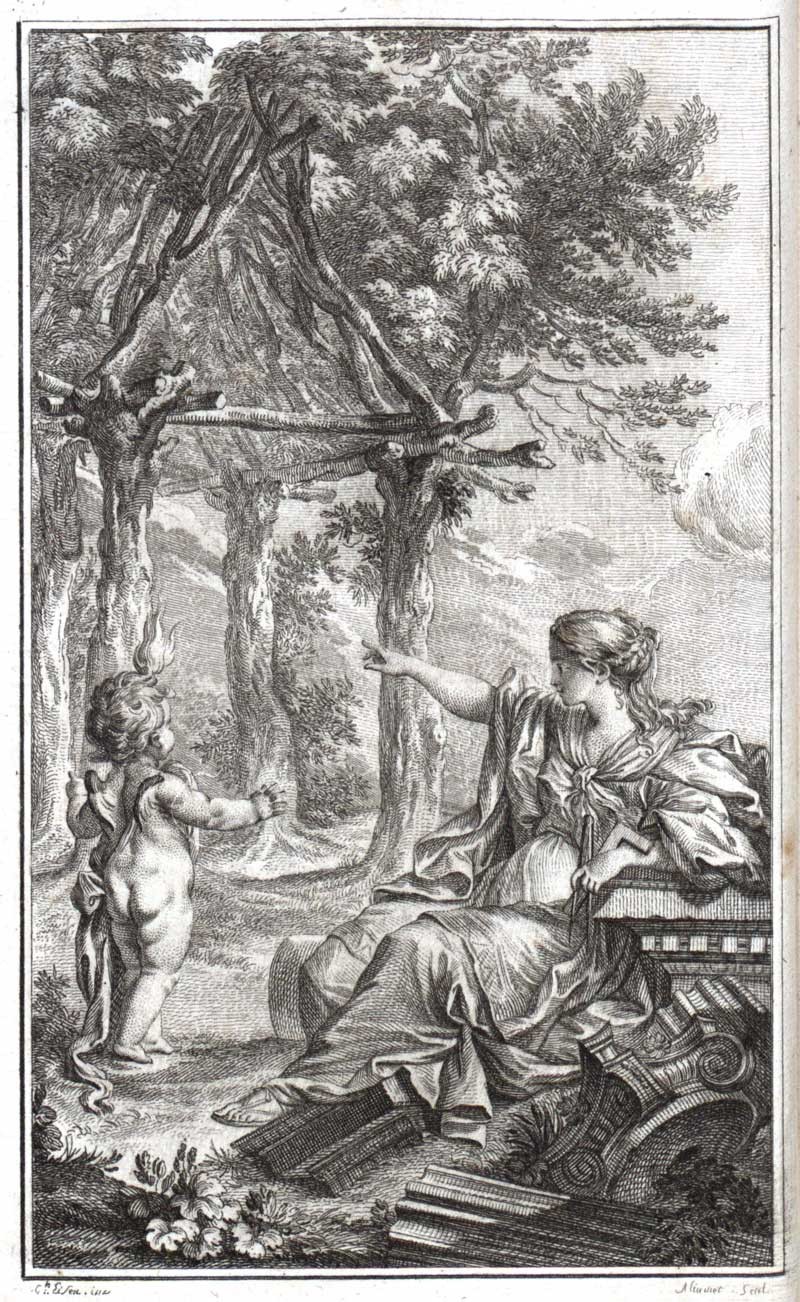
I think of Laugier’s engraving of the primitive hut. The way the angel of history looks at Cleo (not Hestia) turns from the past to point to the primitive hut. But if we look closely at the engraving, we see how the perspective actually shows that it doesn’t point to the past, but to an uncertain future, as in Benjamin’s time, where not only does the architecture lose its own solidity, but the angel loses his horizon, his place.
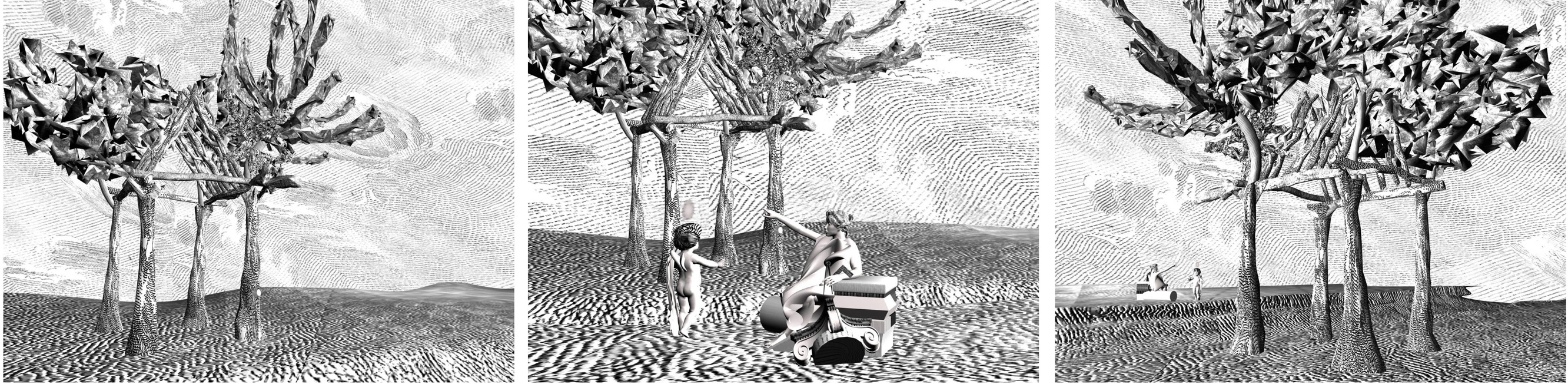
Looking at the 3D reconstruction of the print, we see the fallacy of perspective. Cleo doesn’t point to the past; she points to something outside the frame of the print. She points to the destruction of architectural space. She points to capitalist modernity. The angel of history has lost its place in the world. In the natural landscape. Modern architecture replicates itself without regard for its location. Its “genius loci.” Now the world is flat like blank paper. It’s replicable. Technically reproducible. International Style.
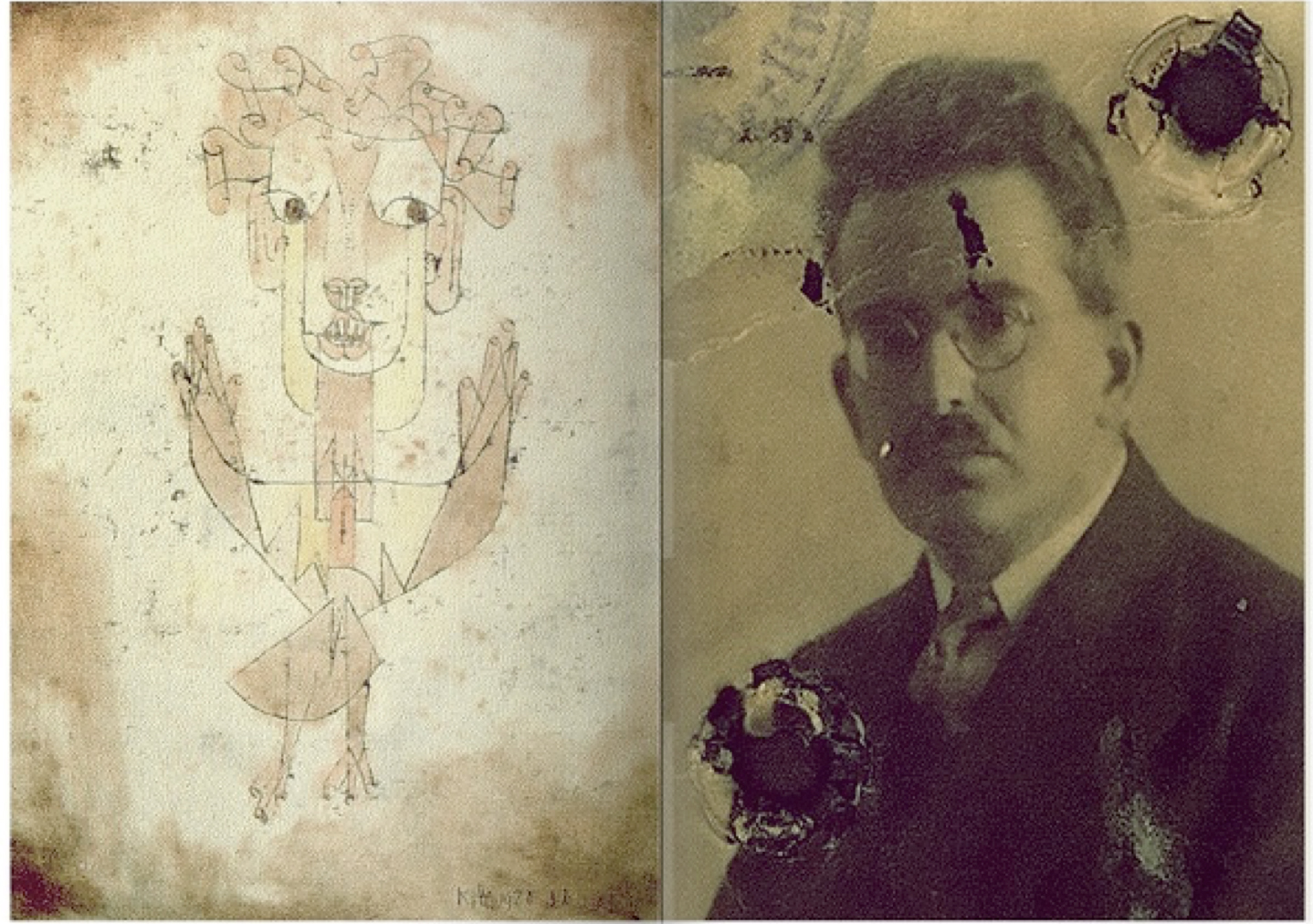
Like Klee’s angel, which Benjamin bought one day and carried with him. That angel with the terrified gaze he carried in his passport. It’s a frightened angel, falling. Like him. Without a homeland and without time.
Architecture, its dreams, are already fading. And we, enamored of the architectural dream, are now faded dreamers, waiting for the new, placeless man to dwell in the image.