

When beginning the process of looking forward, one must look back. Nothing is more characteristic of the human condition than forgetting the past in order to repeat it. And in this way, looking back, understanding the present, is the starting point for thinking about the future. It is not easy to imagine where we are going based on human history, but understanding our place in the evolution of the anthropocentric universe does not allow us today to chart a course for the changes we must face in the technological future of evolution.
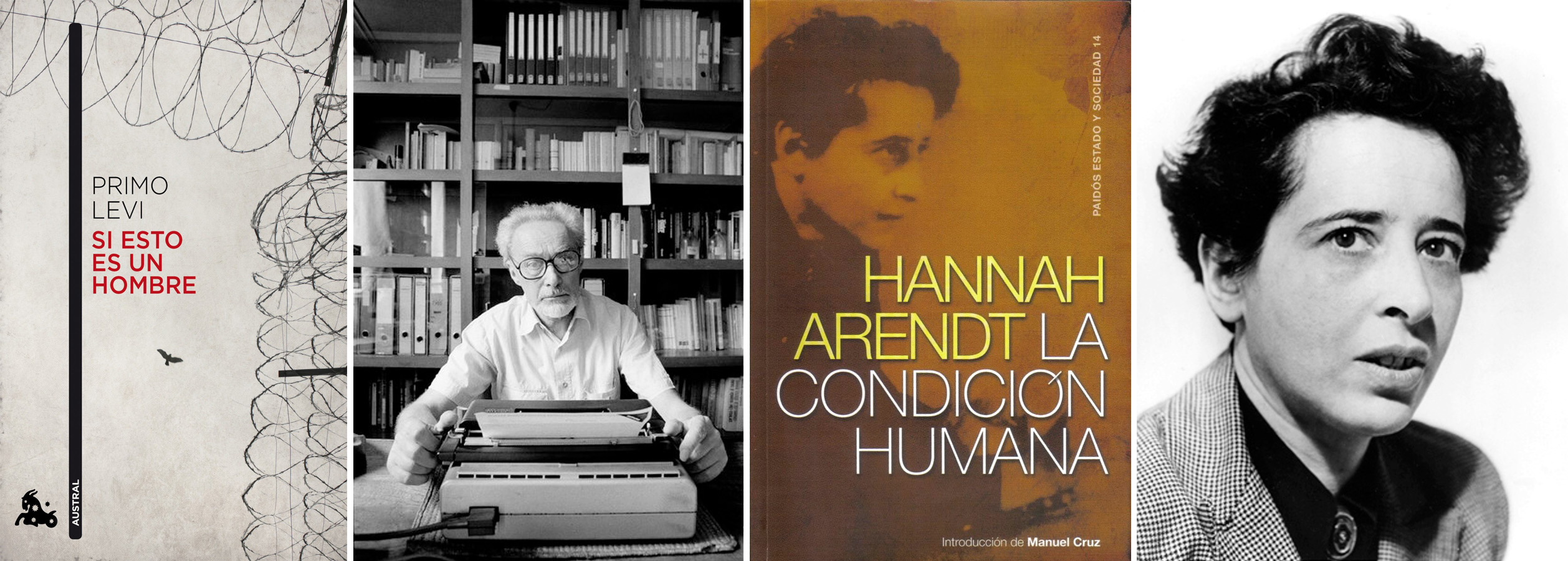
The human mind also needs to consider its place and how it responds to the entropy of its surroundings; a task that is in itself disappointing at the most immediate level, since the way human actions respond to their environment is incomprehensible. Wars and the way human beings act are in every sense irrational. Their relationship with the planet is a true reflection of the self-destructive spirit of the human condition. The denial of common sense regarding taking control of one’s actions is a symptom of the hedonistic principle of the human economic system. Rational determinism abandons us as a species, and therefore we must understand the ultimate meaning of evolution by looking at the grand history and being aware of the tiny gesture that human existence represents within it. While Primo Levy in “If This Is a Man” or Hannah Arendt in “The Human Condition” speak to us of the limits of what is human under the conditions of totalitarianism, on the other hand, I intend to discern the human interrelationship not with its peers, but with its natural environment.
Sometimes my own condition allows me to understand humankind’s infinite capacity for self-destruction; for destroying their home. Their destructive capacity is fueled by the immediacy of pleasure. By the cumulative satisfaction of wealth within the human cultural structure. Even the stubbornness of destroying the natural support that conditions our existence is understood by understanding human pettiness. But understanding the meaning of human existence within the evolutionary framework is undoubtedly the challenge to rational thought. Beyond philosophical thought and its ethical development within today’s world, the need to understand technology is the existential objective of thought.
Now, then, leaving aside the nostalgic and melancholic aftertaste of human thought, it is imperative to look at the development of technology and technology as a mental compass that will allow us to understand the development of superintelligence that is emerging today and which is undoubtedly the main problem threatening the existence of humanity and its biological foundation.
After this brief introduction that contextualizes the discursive development of this essay, I would like to immediately address the approach hidden in the fundamental thinking of technology and the technical development of thought. But how do we think about the beginning? How do we begin a line of discourse on this topic? It’s not easy to stop at the beginning if we don’t know where it is. Nor is it possible to make a tabula rasa and start from scratch. So, in some way, I intend to acknowledge two thinkers who support my starting point. First, David Christian and his concept of Big History recount the evolutionary context; and second, Jared Diamond traces a history of the technical and evolutionary existence of humanity.
Based on the enormous summaries these two thinkers have produced, taking into account books such as Diamond’s “The World Until Yesterday” and “Collapse,” we can intuit the final chapter of Christian’s grand history. This alone allows us to put into perspective what the history of humanity represents in the evolutionary history of the known universe. Meaningless in temporal terms, but incredibly remarkable in technical terms. To enter into this context, in the age of the planet, certain thinkers today have introduced the term Anthropocene. A term coined to designate the end of the Holocene and encompass the impact of humankind on the age of the Earth. Thinking about these timescales, the age of the universe, and the existential path of thought, never ceases to amaze us regarding the exponential explosion in evolutionary speed with the birth of humankind.
By breaking down the timescales of grand history and crossing the thresholds that Christian calls a reset of the evolutionary sense, we are brought to the present moment. It’s already difficult to understand this universal scale at the exponential speed of collective learning. The present is often perceived as the past, and just thinking about my childhood evokes immemorial times that have vanished in eons of time and evolution.
But to avoid seeming like a bucolic raised within the drama of memory, I would like to clarify the importance of what I perceive and clarify the need for the manifesto. The future is already written. Encoded. Determined. And seeing the future will soon be a superhuman task. In this sense, I want to highlight, as an epiphany, the visions of the future that assault my imagination. Just as Terence MacKenna’s visions in “True Hallucinations” anticipated that the planet was actually an egg that, when broken, would give life to a super intelligence (which he referred to as Logos), today we can foresee in Elon Musk’s warnings that we are close to witnessing a threshold of knowledge that we cannot even measure in our most surreal science fiction stories.
With the above as an introduction, I would like to broaden the horizon of thought, focusing the discourse on a current cataloging of technology, in order to establish a navigation map for the essay. But first, laying the groundwork for reality is a large part of what drives me to write this text. And here I want to clarify that the human lifespan is a moment of consciousness on the scale of grand history. But for humankind, anthropocentrism is the ultimate card of organic chemistry to create and sustain the true evolutionary moment. To think that the universe is anthropic, that the Earth has reached the Anthropocene, or that our economic reality, a culture of capital based on the transformative destruction of our surroundings, is nothing more than a narcissistic arrogance typical of the human condition. Since the birth of language, cultural learning, and the invention of writing, memory has been transformed into a sign. The sign is something for someone that represents something else external to that someone. And in this signed economy, The only thing that truly exists is the notion of emotions and human perception. And just as Spinoza and his third chapter of Ethics, with that god of nature, reality is how we perceive and how it affects us. And that is the only challenge machines will have to logically and rationally understand.
The birth of a superintelligence is subject to the most animal of the human. Affections and affections are the cornerstone of a superintelligence consistent with the principle of entropy, which seems to govern the chaos of creation. I believe that at this point, both the destruction of the biological support and the path and future of this superintelligence, which will look back with nostalgia on an organic past, are irreversible. It is not seeing this reality. The dangers of this intelligence perceiving the bodily support and the mind of humanity as a virus, and as such, in its perception, making us expendable. Climate change, the destruction of nature, and the logic of human culture will simultaneously underlie the reasons why the intelligence of the autonomous sign accuses us of being errors in the existential evolutionary future. And in the face of this, human denial, in order to protect the status quo of its cultural institutions, simply prefers to look the other way.
For me, this issue is fundamental to thinking about every aspect of human thought. But in the Kantian categorical imperative, we humans delegate this to machines, and with it, we write the birth of the existential technocene and sign our own judgment on what makes us part of nature. We melancholically end the era of the body, and with the neuronal synapse and the blockchain interface, we predict a future without a poetic past, and we guarantee the death of art and, with it, of humanity.