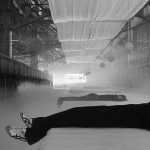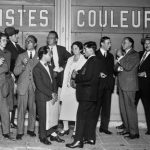


It is this specific house, designed with the intention of a glove, to perfectly fit our individual needs, that demonstrates the impossibility of a house. A house like those of yesteryear. This house should be located in the exact geometric center of the Kobernausse forest (or Kundmanngasse), and should serve as the residence and supreme happiness of its sister. The house would be a cone. An inverted cone, which is more like a tomb. A house that makes us think of a tomb, or an uninhabitable house. Or rather, it is a tomb that serves as a home for the inhabitant.
This was the central idea of Thomas Bernhard’s novel, Correction, and at the time I decided to use it literally for my university housing project.
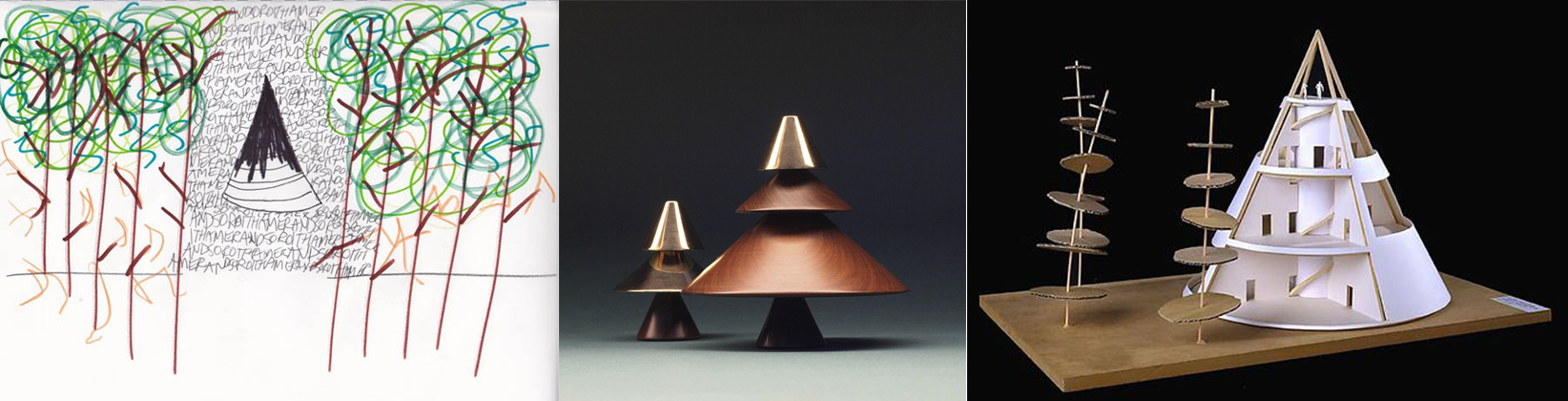
It wasn’t easy to defend and justify the idea. It was a house in the shape of a completely enclosed inverted cone in the middle of the left side of the forest. But that was what the exercise was about. The ideal contemporary dwelling. Dwelling for each of us. Only in the exercise, the teachers didn’t take into account that a student would assume he was an inhabitant, incapable of inhabiting, of living in a meaningless world where the house was a tomb.
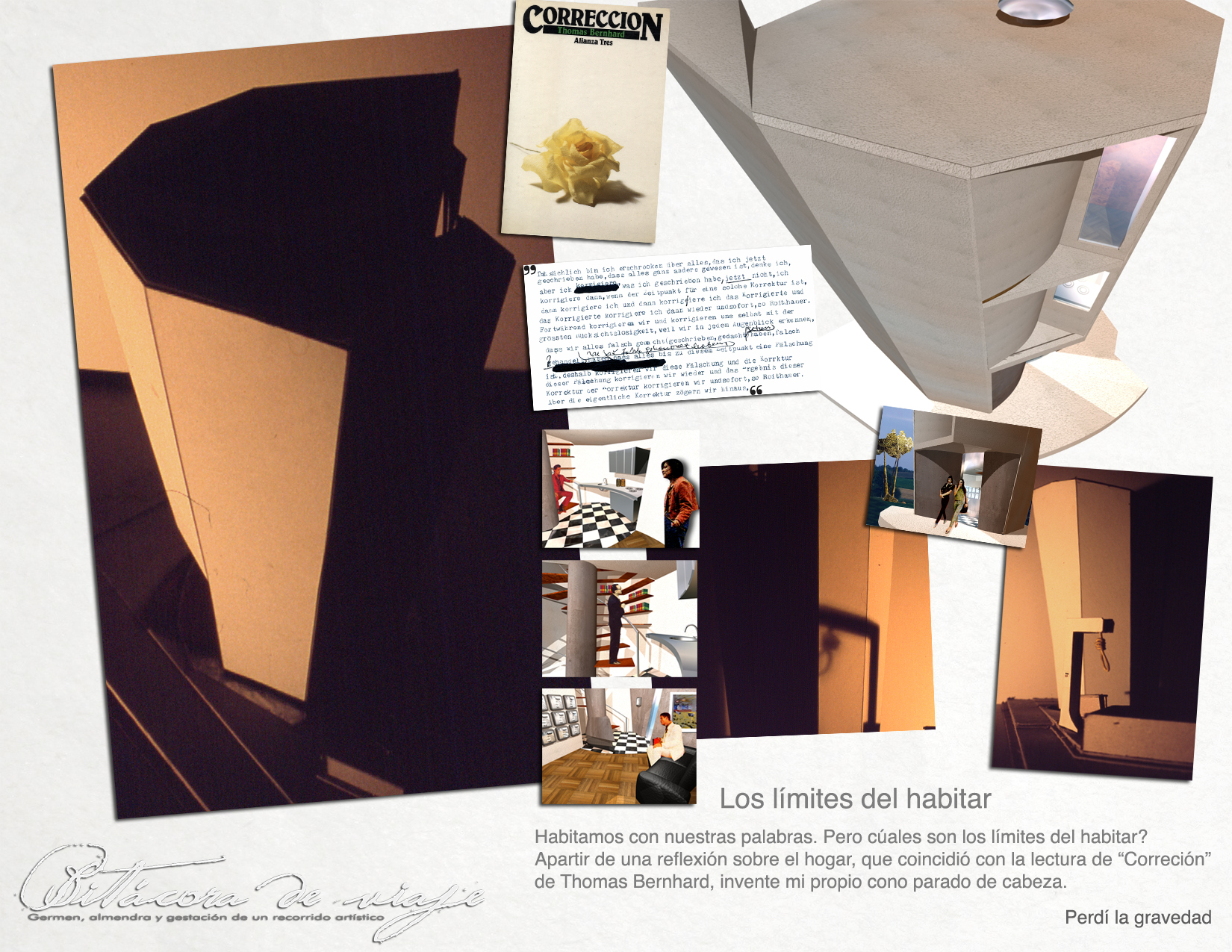
At that moment, the only architecture that made sense to me were monuments or tombs. They were the only constructions that retained part of the content of the world I missed. Of that myth and that poetic inhabitation. From architecture to philosophy, my journey screamed art. That which cannot be expressed with language, a thought placed in space, the sense of inhabiting in creating meaning. Founding. Poetic thought. The exercise showed an inevitable path toward art, but I, so stubborn, would have undergone other prior metamorphoses before arriving.
Yes, indeed, looking back is not like looking forward. But back then, the architect and the philosopher had come up against their own limits. I was tired of searching for meaning in my inhabitation, and all that remained was the distance from the world that distanced my capacity to feel. I was dead. Insensitive, anesthetized, dazed. Obnubilated? I had no horizon ahead, but I knew that the only thing I could do was create. But what did I have to create? What would be the creative path if not planning, or building, or thinking? What was the essence of the contemporary world that would lead me to create through this essential thing?
Si quieres saber mas de esta historia, continua leyendo aquí.
Si quieres saber mas sobre la generación Vienesa de la que habla la novela “Corrección”, pasa al siguiente link.
Si quieres conocer porque esto era hacer arquitectura, pasa al siguiente link.