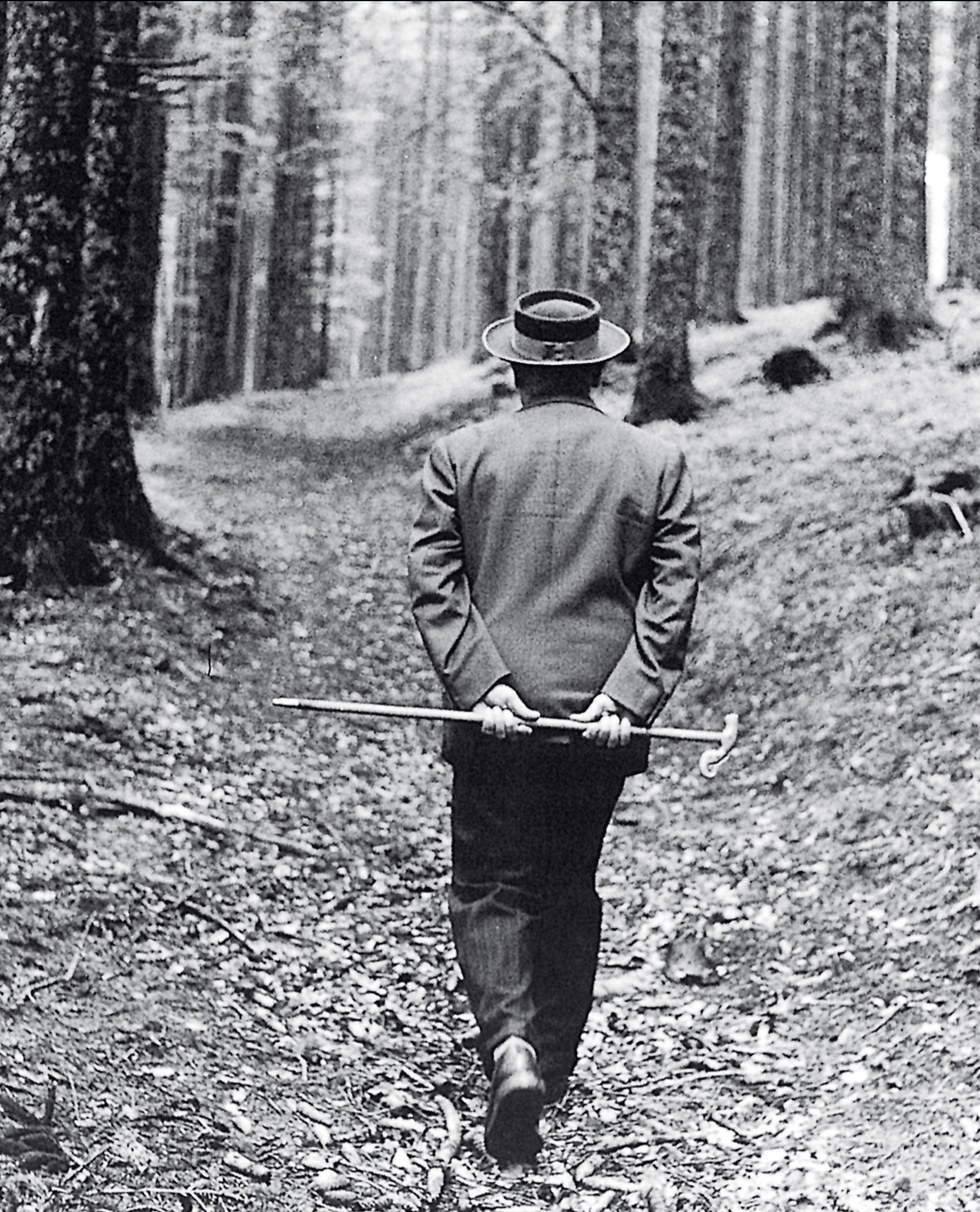


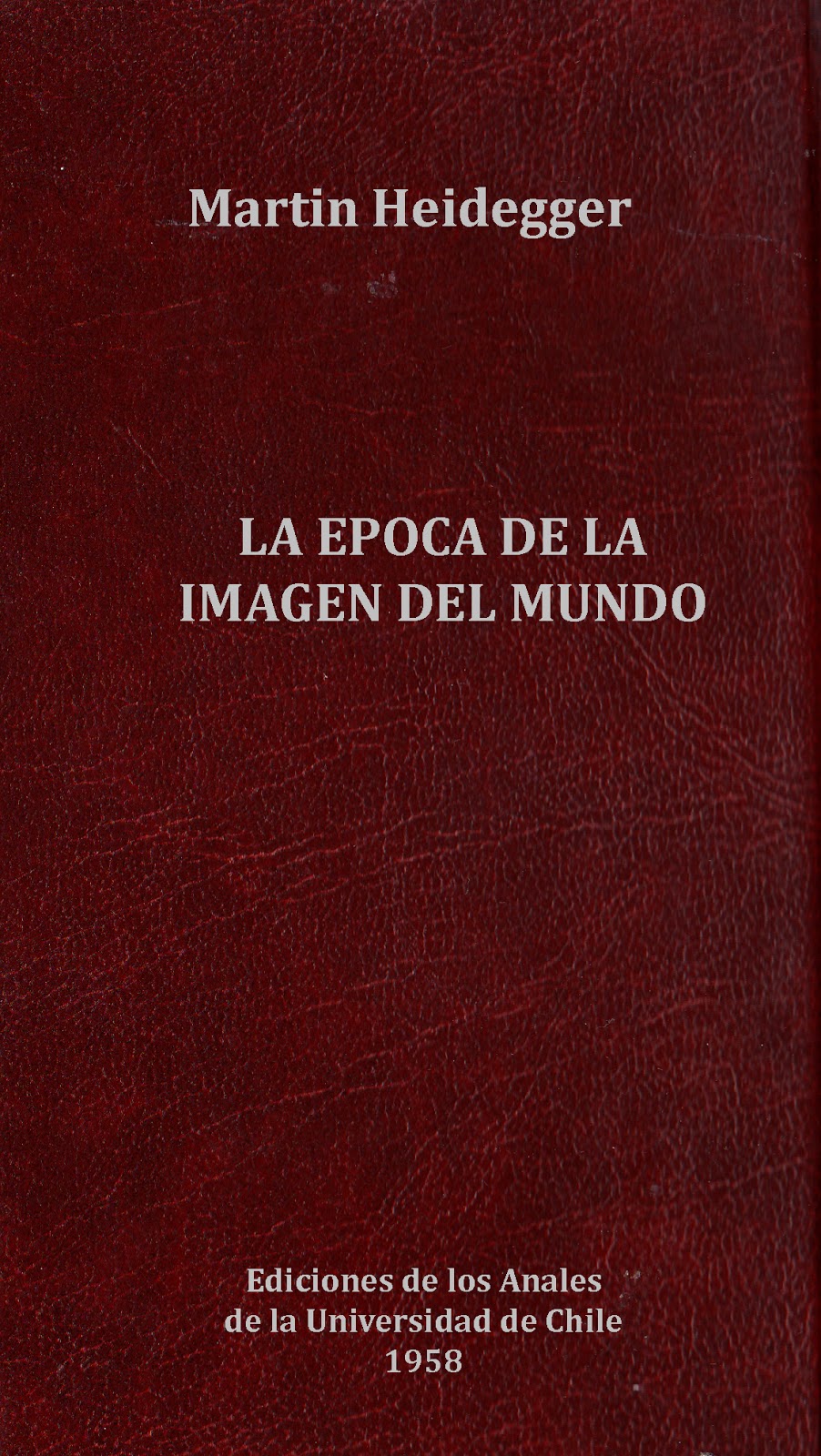
In metaphysics, the being of things is defined and their essence of truth is sought. And our metaphysical foundation is science. This is a modern phenomenon that brings with it mechanized technology as a transformation of practice. With this, aesthetics is also introduced into the field of art, where it becomes an expression of human life. Thus, human action is interpreted and realized as culture. And with this, modernity places us at a moment where we lose the gods. The de-divinization of the world occurs.
With these concrete and severe statements, Heidegger introduces us to a new metaphysics based on a deferential interpretation of beings and leads us to a different way of seeing and questioning natural phenomena. He distances us from a preconception of progress characteristic of modernity and asks us to revisit the origin through an exhortation to language itself. He asks us to distance ourselves from that modern notion of the world that science gives us.
Science proceeds through an investigative method as a way of understanding the world, but in reality, it is not a matter of knowing what is given, but rather a measure that gives it an anticipatory power. What physics does is based on mathematics and is the knowledge of the natural world, especially its bodies and movements. These bodies are in a spatio-temporal relationship. Movement means a change of place. And it is in this movement and in its knowing that science allows man this anticipatory power. This is scientific experience, and therefore it becomes an investigative process. The great foundation of scientific experience is experiment. And in its confirmation or denial, scientific experience is written as the anticipatory power of the world and thus becomes the foundation of truth.
Before modernity, Christianity had monopolized the truth, and only in modernity does the de-divinization of the world and truth occur. Science now owns the truth thanks to the mobility of the concept inherent to scientific knowledge. A law is true only in hypothesis. That is, it is true until proven otherwise. Here, and in this static process of the truth of faith, is where science transfers the content of truth to a hypothetical field.
All science, as research, is founded on the knowledge of a set of objects, delimited by what necessarily makes it particular. Therefore, it must specialize through research, which converts and transforms science into an enterprise. By bringing science to research institutes, it becomes an enterprise. This means that research must be governed by the results of a progressive method, which is why research is given this enterprise character. The method corresponding to each scientific particularity gives it an organizational meaning that transforms it into an enterprise. Thus, the essence of modern science is research, with which the scholar disappears, to be replaced by the researcher.
Knowledge, as research, demands an account of beings about how and to what extent they are available to representation. Nature and history become objects of explanatory representation. It brings all beings before itself in such a way that calculating man can be certain of beings insofar as he measures them and makes them known. Truth becomes a certainty of representation. And with this, an objectivity proper to modern science is established. With this, the very essence of man is also transformed by turning him into a subject. This key gesture of modernity transforms the world of man into the image of the world of man. The world is represented through the image.
The image is a reproduction. But not in the sense of a tracing, but rather in the sense of being aware. Being aware means being informed. The image of the world is not in itself an image of the world, but rather the world is conceived as an image. This gesture transforms human thought and radically separates it from its essence. This fact that the world becomes an image is the characteristic of the essence of modernity.
Man situates himself in relation to beings in the image. The modern world exists in its representability. It is a bringing before itself and toward itself. As soon as the world becomes an image, man’s position is understood as a worldview. The image now signifies the configuration of representative production.
But man will not be able to know the essential and true, but will know what is incalculable within the gigantic and the minuscule. The incalculable casts a shadow over things when man as a subject distances himself from them to see it. But this gesture of modernity, of fleeing from tradition, blinds man to the historical moment in which we find ourselves. But without a doubt, this measure of man in relation to the world distances him from his essence in relation to being.
But man will not be able to know the essential and true, but will know what is incalculable within the gigantic and the minuscule. The incalculable casts a shadow over things when man as a subject distances himself from them to see it. But this modern gesture of fleeing from tradition blinds man to the historical moment in which we find ourselves. But without a doubt, this measure of man in relation to the world distances him from his essence in relation to being in the world. And it is here that the poet arrives and reminds us that the measure of man is a poetic measure. A poetic dwelling.