
Pa’ünaa
Wayuu Dowry and Desert Cultures
The Dowry: Poetics of the Bond and Restitution
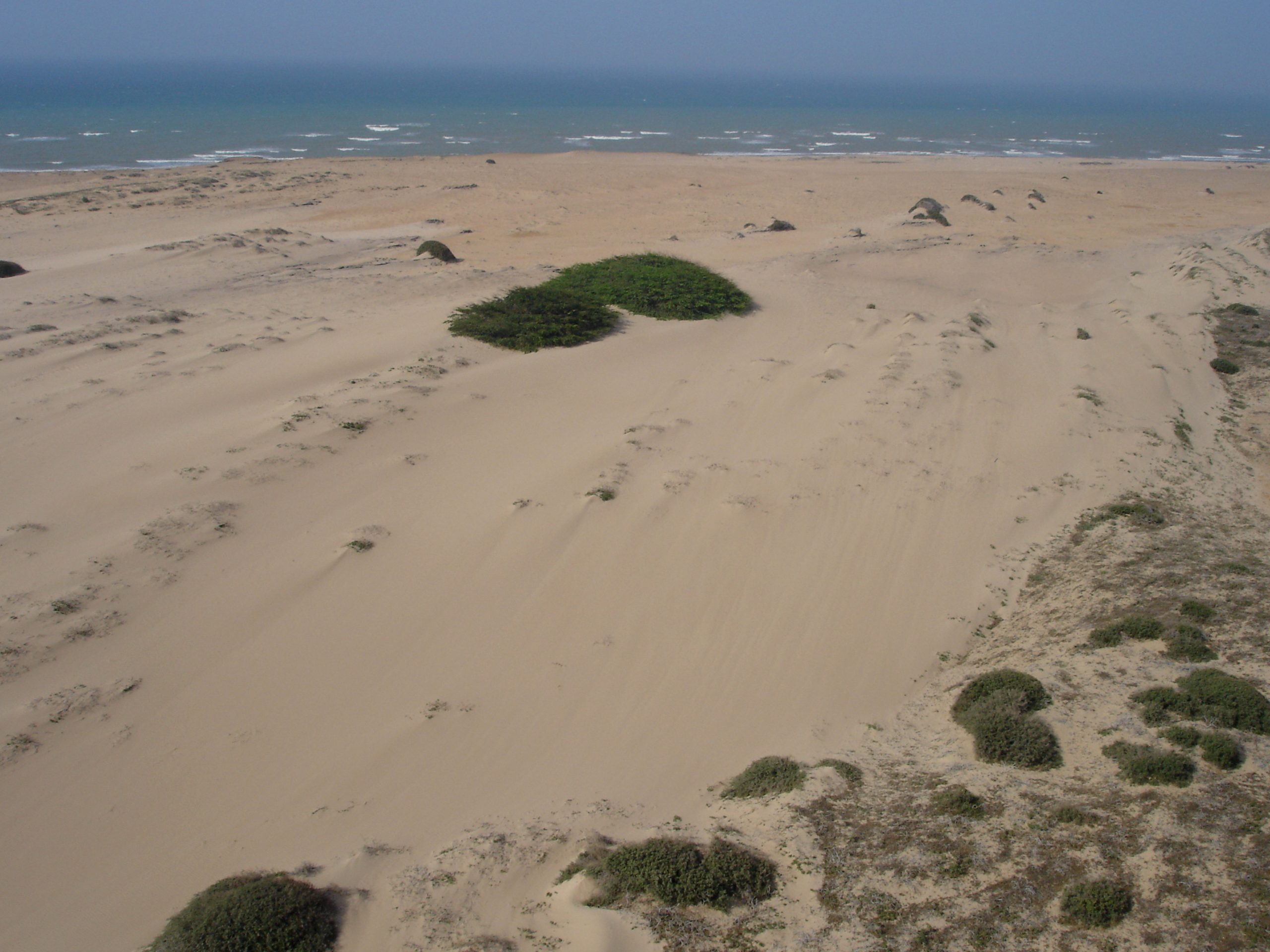
There are gestures that time fails to translate. Among them, the dowry—that word that the West contaminated with the logic of price—survives in the desert like an echo older than currency. In the land of wind and salt, among the Wayuu, the dowry doesn’t buy: it weaves. It’s not a transaction, but a weaving of words, goats, stones, and threads that restores balance between two lineages. It’s a pact that isn’t signed, it’s spoken.
The Apa’üna, the root of “seed” (a’ü) and “earth” (Mma), reminds us that every alliance is born from the same gesture that gave rise to the world: sowing. When a man brings his word and his offerings to the woman’s clan, he doesn’t give objects, but living signs of respect. Every goat, every necklace, every piece of fabric that crosses the desert threshold carries a word of honor, an invisible restitution. The female clan does not lose a daughter: it multiplies its lineage in the land of the other.
In the Wayuu perspective, marriage is not the union of two bodies, but of two times. The past of the ancestors is linked with the promise of the future. At the heart of that union, the woman is the axis that remains unchanged. Around her revolves the sense of kinship, the memory of the clan, the continuity of life. She is the land where names germinate, the repository of law and dreams.
Therefore, the dowry is not payment: it is recognition. It is the way in which a lineage honors the creative power of the other. In the desert, where survival depends on reciprocity, to give is to exist. The Pa’ünaa is thus the breath that balances the worlds, the offering that makes dialogue between families possible, the material translation of a cosmic principle: that of correspondence.
The goods exchanged—livestock, jewelry, textiles—have no market value. They are syllables of the cosmos. The gold of the sun in necklaces, the movement of sand in the designs of kanaas, the rhythm of goats in the life of the clan. In them resonates the voice of the earth, the memory of the mothers who wove before. Each dowry is a constellation of meanings: an offering that speaks of fertility, respect, and continuity.
While the modern world translates love into numbers, the peoples of the desert preserve their ancient language of connection. In the desert, there are no contracts, only pledged words. A palabrero travels between ranches to pronounce the exact measure of balance. Because there, breaking one’s word is breaking the order of the world.
The Pa’ünaa, understood in this way, does not belong to the past. It is a poetics of restitution and alliance, a reminder that every union requires compensation, not as debt, but as gratitude. In the face of the aridity of individualism, this rite teaches that the human bond is sustained by the exchange of gifts, by the awareness that all living things feed on one another.
The Wayuu dowry does not oppress; it consecrates. It names the woman’s value not in numbers, but in symbols. It recognizes in her the center of genealogy, the fire that never goes out. When the clans meet, the desert is filled with words and cattle, with textiles that are maps of the sky. In that silent act, the order of the world is restored: the balance between what is given and what is kept, between flesh and word, between clan and earth.
Because in the end, every dowry is a seed: an offering to time, a thread of sun woven with wind. The Pa’ünaa reminds us that life, like textiles, only exists if the threads are stretched together, if reciprocity sustains the weave.
And so, in the Wayuu desert, the dowry buys no one: it heals the bond.
Wayyunaiki

The dowry, in this context, can be read as a poetics of bonding: a way of making visible the invisible fabric of human alliances. It is the gesture with which a community honors the transition of a woman between lineages, not as an object of exchange, but as a seed of continuity, an act that reenacts the origin of life.
In Wayuu poetics, marriage is a sowing: Apa’üna comes from the roots “seed” (a’ü) and “earth” (Mma). Thus, the alliance between clans reproduces the creative gesture of nature, where union is a form of social fertility. The dowry becomes a metaphor for the balance between worlds, the thread that sews the fracture between self and other, between desire and law, between matter and spirit.
In this view, weaving, compensating, and allying are equivalent acts: ways of restoring order, of keeping the fabric of the common alive. The dowry, understood from this cultural poetics, is not a sign of submission, but a celebration of lineage, of speech, and of the gift. It is the ritual gesture by which the community recognizes that every union requires reciprocity, and that harmony—like a fabric—is sustained only when the threads remain taut yet intertwined.
In the Wayuu universe, the dowry—Pa’ünaa or Apa’üna—is not a transaction: it is a word woven from matter, a ritual gesture that keeps the balance between clans alive. Where the Western eye has seen a “purchase,” the Wayuu recognize an act of alliance and respect, a restoration of the cosmic order between land, word, and life.
The term Apa’üna unites two roots: a’ü (seed) and Mma (earth). Thus, marriage is understood as an act of sowing, a symbolic regeneration of the world. In the desert of La Guajira, each alliance between clans renews the continuity of existence: the woman carries with her the lineage, history, and memory of the maternal clan, and the man, by offering the Pa’ünaa, recognizes that power of germination, that capacity to create and sustain life.
The Pa’ünaa does not pay: it restores. It is the invisible thread that unites what is separated, that transforms distance into kinship. Each gift given—a goat, a jewel, a piece of textile—is a sign of the respect and honor with which one clan bonds with another. The cattle represent abundance, the jewels condense the power of the earth (Mma), and the textiles, crafted by the women, translate cosmology into form and color. The alliance is sealed not with gold, but with living symbols, with materials that speak of time, care, and continuity.
The rite is mediated by the pütchipü—the word-giver—guardian of the right word. Law and poetry intertwine in his voice: each phrase uttered maintains the balance between the worlds. In Wayuu culture, the word is both law and textile; it is the instrument that orders and pacifies, that names harmony before it exists.
From this logic of the gift, the Pa’ünaa becomes a language of reciprocity, a poetics of interdependence. Its profound meaning lies not in material exchange, but in the awareness that every bond requires a gesture of return. Giving is not losing, but ensuring that the bond endures. The dowry, then, is a form of active memory: each time a clan gives its compensation, it reaffirms its belonging to a network of alliances that sustains collective life.
In this landscape of wind and sand, where the feminine weave represents the cosmos and the masculine word embodies mediation, marriage is a work of balance. A man does not acquire a wife: he is linked to a genealogy, to a land, to a constellation of names and symbols that precede him. In the act of the Pa’ünaa, the power of the female lineage—the root of Wayuu identity—is recognized and the centrality of women as the axis of culture, territory, and law is affirmed.
In the face of contemporary distortions that attempt to monetize this ancestral gesture, Pa’ünaa endures as an ethic of connection, a reminder that societies are not sustained by exchange value, but by the value of the word, reciprocity, and restitution.
In Wayuu poetry, the dowry is a fabric that repairs the world. It is the living metaphor of alliance, the sensitive manifestation of an ancient wisdom that still teaches that every union—between bodies, families, or territories—requires balance, memory, and gift.
Because where the sun and the wind trace their law on the sand, Pa’ünaa persists as an act of cosmic love: the art of sowing bonds in the land of the other.