

Growing up, I learned about art through books. They were prints that told stories in an album. The images reproduced by the works illustrated the history of art.
It wasn’t until I turned 30 and left Colombia for the first time, on a trip to Europe, that I was confronted with the artwork and its work. What at one time was seeing the woman with the pearl earring and Liberty Leading Her People, like stickers in the album, took on a real dimension when I saw the size of each work in person. But it wasn’t just that the work impressed me with its scale. It was its action on me that changed my understanding of what I had considered art until then.
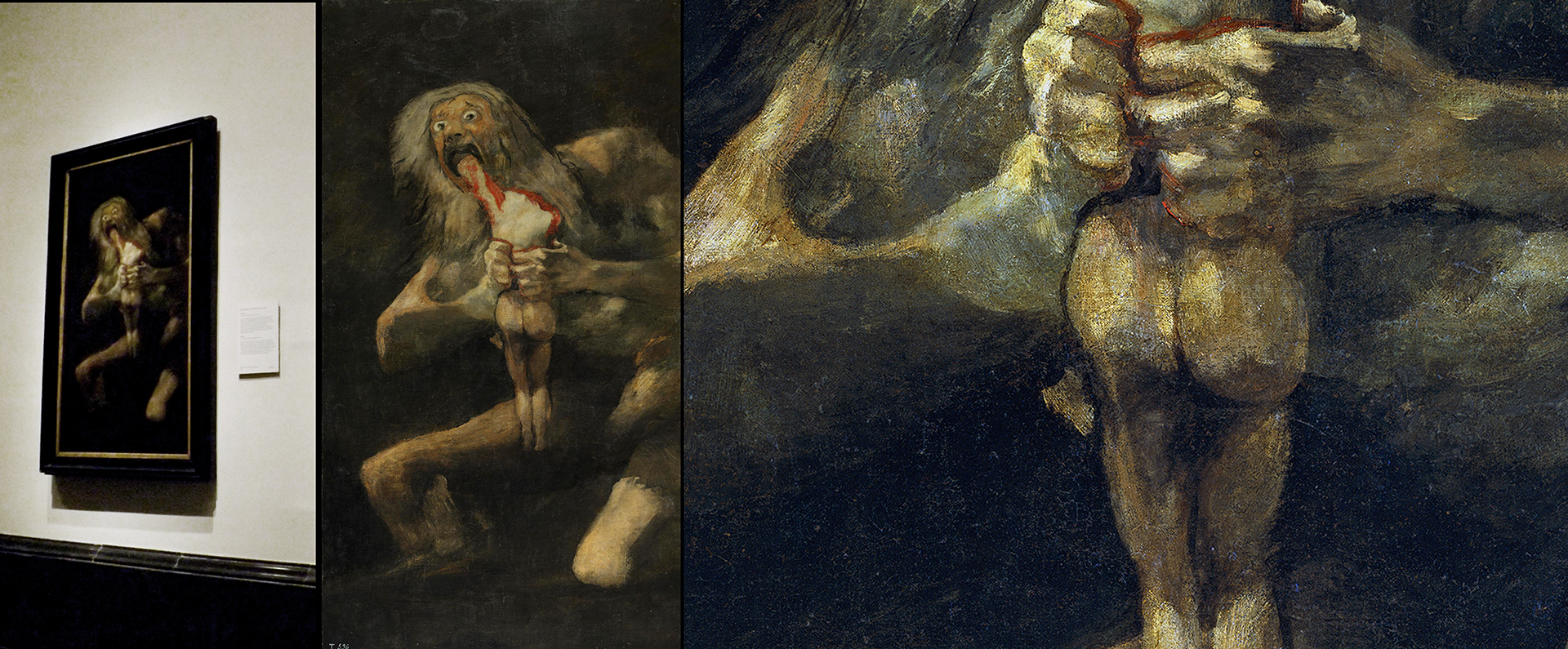
But in reality, what moved me most at one point in the museum was an atypical experience. I was in the Prado Museum, observing Goya’s Saturn Devouring His Son. Next to me, an elderly man was looking at the lonely room, which, apart from the two of them, was inhabited only by the works and a sleepy guard in a chair. That’s when it hit me. Literally, the old man next to me, looking at the painting, hit me hard on the back; his terrified face was scarier than Saturn’s, biting his children to pieces.
I know, I told him at first. It’s heartbreaking. But it was only then, as the old man collapsed on the living room floor, that I realized he was actually having a seizure. The guard suddenly woke up and radioed for the museum’s paramedics to provide immediate attention. Clearly terrified and unfazed, the guard asked me to leave, which I did, still in shock. My feet, on their own, carried me not only out of the room but out of the museum. I ended up in the park, and when I came to, I was able to cry, and like the son of Saturn, I understood the untimely end of life. Between tears and revelation, I took out a notebook and a pencil and wrote a letter to my father, to let him know that he wouldn’t be devoured by time and that for now, while we shared the ephemeral consciousness of life, I wanted to make it clear that I loved him.
These experiences marked my path in art. I was almost always a spectator, but I would eventually approach art as a creator. What emotions did I want to awaken? What experience would I have to convey in the work?
The effect of one sensation on others amazed the gaze of the masterpieces of art history. But these days, art has a different effect, different emotions. The work of art is in an age of technical reproducibility.
Si quieres saber mas de esta historia, continua leyendo.
Si quieres conocer cual seria el camino artístico, pasa a el siguiente link.
Si quieres saber sobre la obra artística, pasa a el siguiente link.