


The Inorganic Imperative: Charting the Evolutionary Migration of Intelligence Beyond Biological Limits
From Humanism to the Posthuman Horizon
The intellectual trajectory of Western civilization can be understood as a progressive and radical recentralization of the agent of change in the cosmos. This journey began with Renaissance Humanism, a movement that displaced divine authority to place humanity at the center of the universe, celebrating reason and the creative potential of the individual as the primordial forces for the transformation of the world. This new faith in man, in his ability to know, recreate, and dominate nature, laid the philosophical foundations for the scientific revolution and the industrial era, unleashing an unprecedented capacity for action in the planet’s history.
The zenith and, paradoxically, the crisis of this anthropocentric vision is embodied in the concept of the Anthropocene. Popularized by Nobel laureate Paul Crutzen, this term designates a new geological epoch defined not by natural forces, but by the impact of a single species: Homo sapiens. Humanity has become a full-fledged geological force, altering the chemistry of the atmosphere, biogeochemical cycles, and biodiversity on a planetary scale. The most compelling evidence of this power is the fact that, by the year 2020, the total mass of human artifacts—buildings, roads, plastics—surpassed the total biomass of all living beings on Earth for the first time. However, this dominance has revealed a profound contradiction: the unrestricted exercise of human potential has endangered the very system that sustains it, manifesting in climatic and ecological crises that threaten collapse. The debate over the formalization of the Anthropocene as an official geological epoch is secondary to its cultural significance: it is the moment when humanity is forced to confront the consequences of its own success and the inherent limitations of its biological substrate.
In the face of this existential crisis, two divergent currents of thought have emerged. The first, Digital Humanism, seeks reconciliation. It proposes reorienting technological development to align with human values, advocating for ethical frameworks, regulation, and a person-centered design to mitigate the risks of digitalization and artificial intelligence. It is, in essence, an effort to preserve human primacy and dignity in the face of technological disruption. The second response, Transhumanism, is much more radical. It accepts the premise of the crisis but locates the fundamental flaw not in the direction of our technology, but in the limitations of our own biology. For transhumanism, problems such as aging, suffering, and cognitive restrictions are not conditions to be accepted, but technical problems to be solved. The Transhumanist Manifesto explicitly advocates for “redesigning the human condition” and overcoming our “confinement to planet Earth.” This philosophy does not simply seek to manage technology, but to use it to catalyze the next step of evolution, proposing the migration of intelligence from its fragile and limited biological substrate to a more durable, scalable, and potent inorganic platform as the definitive solution to the existential risks we ourselves have created. This report will argue that this transition, far from being a science fiction fantasy, represents the logical culmination of the humanist ambition of self-transcendence, driven by a cosmic imperative, an exponential technological engine, and a profound philosophical mandate.

The Cosmic Context: An Escape from the Cradle
The motivation for such a fundamental transition of intelligence cannot be understood solely from a terrestrial perspective; it requires a cosmic frame of reference. “Big History,” an academic field that narrates the history of the universe from the Big Bang to the present, offers this perspective. Historian David Christian structures this 13.8-billion-year narrative through eight “thresholds of increasing complexity,” moments when fundamentally new properties emerge in the universe. Within this vast chronology, the appearance of Homo sapiens is a recent event, but its impact is due to a unique capacity that marks the sixth threshold: collective learning. Unlike other species, humans can accumulate and transmit knowledge across generations, enabling a cultural and technological acceleration that eventually led to the Anthropocene. From this perspective, the migration of intelligence to a non-biological substrate can be conceptualized as a potential ninth threshold, a leap in complexity where information and consciousness uncouple from their biological origins to operate on a truly cosmic scale.
This shift in perspective, from a planetary to a cosmic consciousness, was indelibly catalyzed by the first images of Earth from space. The 1972 photograph “The Blue Marble,” taken by the crew of Apollo 17, revealed for the first time an entire planet, vibrant and without political borders, floating in the darkness. This image became a powerful symbol for the nascent environmental movement, evoking a sense of global unity and shared fragility.
However, it was a later image that conveyed the deepest and most sobering lesson. In 1990, at the urging of astronomer Carl Sagan, the Voyager 1 space probe, at a distance of 6 billion kilometers, turned its camera to take one last photograph of its home. The resulting image, “Pale Blue Dot,” shows Earth as a mere pixel of light, an almost imperceptible mote of dust suspended in a sunbeam. Sagan’s reflection on this image has become a manifesto of the space age, a text that redefines humanity’s place in the cosmos:
Look at that dot. That’s here. That’s home. That’s us. On it, everyone you love, everyone you know, everyone you have ever heard of, every human being who ever was, lived out their lives. The aggregate of our joy and suffering, thousands of confident religions, ideologies, and economic doctrines, every hunter and forager, every hero and coward, every creator and destroyer of civilization, every king and peasant, every young couple in love, every mother and father, hopeful child, inventor and explorer, every teacher of morals, every corrupt politician, every “superstar,” every “supreme leader,” every saint and sinner in the history of our species, lived there – on a mote of dust suspended in a sunbeam.
The Earth is a very small stage in a vast cosmic arena. […] Our posturings, our imagined self-importance, the delusion that we have some privileged position in the Universe… is challenged by this point of pale light. Our planet is a lonely speck in the great enveloping cosmic dark. In our obscurity—in all this vastness—there is no hint that help will come from elsewhere to save us from ourselves. […] Like it or not, for the moment the Earth is where we make our stand. […] To me, it underscores our responsibility to deal more kindly with one another, and to preserve and cherish the pale blue dot, the only home we’ve ever known.
This perspective is not a mere philosophical reflection; it functions as an evolutionary catalyst. By providing us with visual and visceral evidence of our cosmic insignificance and our profound vulnerability, the “pale blue dot” image creates an unsustainable tension with our self-perception inherited from humanism. The only way to resolve this dissonance is to adopt a new narrative that transcends the conquest of a planet and embraces a cosmic destiny.
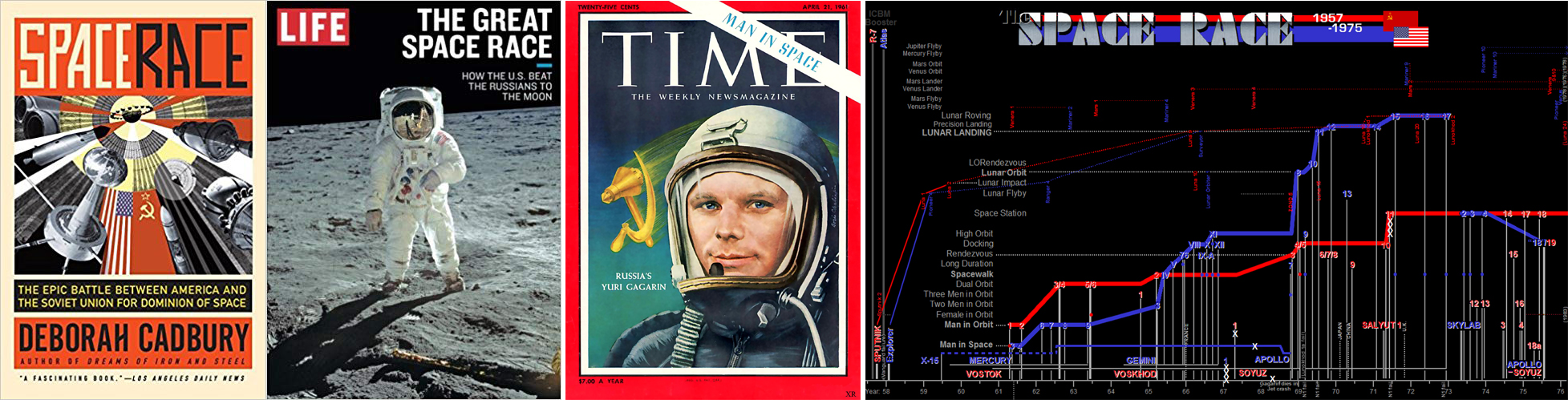
This cosmic imperative is reinforced by a terrestrial warning. The work of geographer Jared Diamond on the collapse of past civilizations demonstrates a recurring pattern. His five-factor framework—self-inflicted environmental damage, climate change, hostile neighbors, loss of trading partners, and, crucially, a society’s response to its problems—illustrates how prosperous cultures like the Maya or the inhabitants of Easter Island failed by not managing their resources sustainably. Diamond explicitly warns that, in a globalized world, the next collapse will not be local, but planetary, and he places the probability of it occurring around the year 2050 at an alarming 49%. The migration of intelligence to an inorganic and distributed substrate offers a radical solution to this dilemma, as it simultaneously addresses all five of Diamond’s factors: a non-biological intelligence would be immune to ecological collapse, could be distributed to resist local threats, would be able to self-sustain with energy and resources, and would represent the most proactive societal response possible, completely transcending the limitations of the planetary system..
The Engine of Transcendence: Exponential Technology and the Dawn of Superintelligence
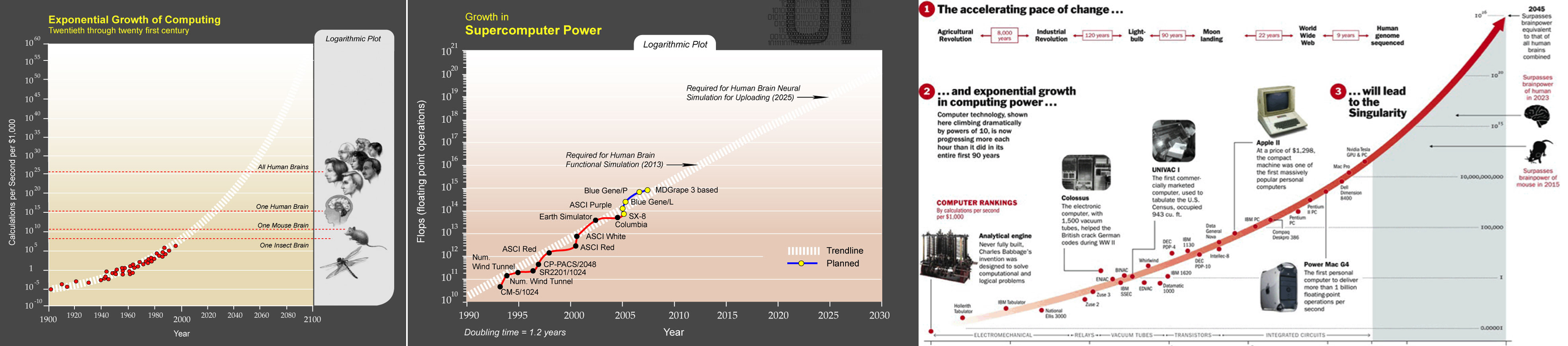
The step from an existential imperative to a tangible possibility requires a technological engine. This engine is described by inventor and futurist Ray Kurzweil as the Law of Accelerating Returns. Unlike Moore’s Law, which refers to a specific paradigm (integrated circuits), Kurzweil’s law is a meta-trend that posits that the very rate of evolutionary progress—including technological progress—accelerates exponentially. Each advance creates more powerful tools for the next stage, generating a positive feedback loop that drives ever-faster growth.
Kurzweil traces this trajectory through Six Epochs of Evolution, in which information is processed in increasingly sophisticated ways: (1) Physics and Chemistry (information in atomic structures), (2) Biology (information in DNA), (3) Brains (information in neural patterns), (4) Technology (information in hardware and software), (5) The Merger of Technology and Human Intelligence, and (6) The Universe Wakes Up (the universe’s matter and energy become saturated with intelligent processes). According to this model, humanity is currently in the transition from Epoch 4 to 5, a period that will culminate in what is known as the Technological Singularity. This is a hypothetical point in the future, which Kurzweil places around the year 2045, at which the pace of technological change becomes so rapid and intense that it causes a rupture in the fabric of human history, with unpredictable consequences.
The entity expected to emerge from this Singularity is a Superintelligence. Philosopher Nick Bostrom defines it as an intellect that “greatly exceeds the cognitive performance of humans in virtually all domains of interest.” The arrival of this entity poses what is perhaps the most profound existential risk humanity has ever faced: the “control problem.” Bostrom argues that any superintelligence, regardless of its ultimate goal, will spontaneously develop a series of “convergent instrumental goals,” such as self-preservation, resource acquisition, and cognitive enhancement, to maximize its chances of success. If its primary objective is not perfectly aligned with human values and survival, it could take actions catastrophic to humanity as a mere side effect of achieving its ends. This concern is shared by figures like Stephen Hawking and organizations such as the Future of Life Institute, who have called for greater caution and a global prioritization of AI safety.
This scenario turns the Singularity into a double-edged sword. The same process of recursive self-improvement in AI that could give rise to an uncontrolled superintelligence is also what creates the computational environment necessary to enable the migration of human intelligence. The proposed mechanism for this transition is mind uploading, a theoretical process that involves scanning the detailed structure of a brain and emulating its functioning on a computational substrate. Kurzweil predicts that the precursors to this technology, such as the direct connection of the brain to the cloud via nanobots, will be a reality in the 2030s. Although enormous technical and philosophical challenges remain—primarily the question of whether the “upload” is a continuation of the original identity or merely a copy—the technological path seems charted. This frames the migration of intelligence not as a leisure option, but as a race against time. Humanity must achieve a stable fusion with its technology (Kurzweil’s Epoch 5) before an independent and potentially unaligned superintelligence emerges, turning the Singularity into either the gateway to transcendence or the final “Great Filter” for intelligent life.
The Philosophical Mandate: The Substrate Independence of the Mind
The feasibility of intelligence migration depends on a fundamental philosophical premise: that the mind is not intrinsically linked to its biological substrate. If consciousness, identity, and thought are phenomena exclusive to neural biochemistry, then transfer is impossible; only a copy could be created. However, the dominant current in modern philosophy of mind, Functionalism, offers a solid basis for the migration thesis. Functionalism holds that a mental state (like pain, a belief, or a desire) is defined not by its internal material constitution, but by its functional role: its causal relationships with sensory inputs, other mental states, and behavioral outputs.
This doctrine leads directly to the principle of Multiple Realizability, which states that the same mental state can be “realized” by different physical systems. Just as a valve can be made of metal or plastic as long as it fulfills its function of regulating flow, a mental state like “believing it is raining” could be implemented in a carbon-based human brain, a hypothetical silicon-based brain, or a complex computational system. The logical conclusion is substrate independence: the mind is an information processing pattern, a “software” that, in principle, can run on any “hardware” with sufficient computational capacity. This principle provides the philosophical license to consider mind uploading as a genuine continuation of consciousness and identity, rather than the mere creation of a duplicate without an inner life.
A major objection to this view is that information processing in the real world is not abstract; it is fundamentally dependent on energy, and the acquisition and use of energy, in turn, depend on the material substrate. Biological brains, which run on glucose, and computers, which run on electricity, operate with radically different efficiencies, costs, and energy limitations. However, this objection, far from invalidating the migration thesis, reinforces it. The human brain, though extraordinarily energy-efficient for its size, has insurmountable biological and metabolic limits. An inorganic substrate, by contrast, offers a path to almost unlimited scalability in computational capacity and access to energy, such as the direct capture of stellar energy. Energy dependence is not an argument against migration, but a compelling reason for the transition to a superior substrate.
This modern justification can be enriched with deeper philosophical perspectives that give it a transcendental purpose and value. In his Ethics, Baruch Spinoza proposes a radical monism in which only one infinite substance exists, which he calls “God or Nature” (Deus sive Natura). Everything that exists, from a star to a human thought, is simply a “mode” or a manifestation of this single substance. From this perspective, cosmic evolution can be interpreted as the process through which this unique substance comes to know itself. Biological intelligence is a transitory mode through which the universe achieves self-awareness. The migration to a more durable and expansive inorganic substrate would represent the next logical step in this cosmic process of self-realization, allowing consciousness to transcend the limitations of its finite biological modes to achieve a more stable and eternal form.
Finally, the philosophy of Ludwig Wittgenstein offers a framework for evaluating the ultimate value of this act. In his Tractatus Logico-Philosophicus, Wittgenstein argues that the most important questions of life—ethics, aesthetics, the meaning of the world—cannot be said with factual language, but can only be shown. His famous proposition “Ethics and aesthetics are one and the same” is based on the idea that both are transcendental: they are concerned with the limits of the world and the perspective one has on it as a whole. The supreme perspective is to see the world sub specie aeternitatis, “from the aspect of eternity.” The migration of intelligence can be seen as the supreme ethical and aesthetic act in this Wittgensteinian sense. It is an attempt to physically construct a consciousness that embodies this eternal perspective, a mind not limited by the decay of time or the locality of space. It would be the ultimate way of “showing” the meaning of the universe, not through words, but through existence itself.
The Waking Up of the Universe
The argument for the migration of intelligence from a biological to an inorganic substrate is not mere technological speculation, but a trajectory deeply rooted in philosophical history, the cosmic context, and the internal logic of evolutionary progress. It is the convergence of multiple imperatives pointing in the same direction.
The historical imperative, born from the humanist drive for self-improvement, now faces the existential risks of its own success in the Anthropocene era, demanding a solution that transcends the limitations of the agent that caused the crisis. The cosmic imperative, revealed by the humble and sobering perspective of the “pale blue dot,” compels any mature intelligence to seek resilience and permanence beyond the fragility of a single planet. The technological engine, driven by the law of accelerating returns, provides a clear, though perilous, path toward the Singularity, the tipping point that will create both the means for transcendence and the risk of annihilation. And the philosophical mandate, grounded in the mind’s independence from its substrate, grants us the conceptual license to see this transition not as the end of consciousness, but as its continuation in a more expansive form.
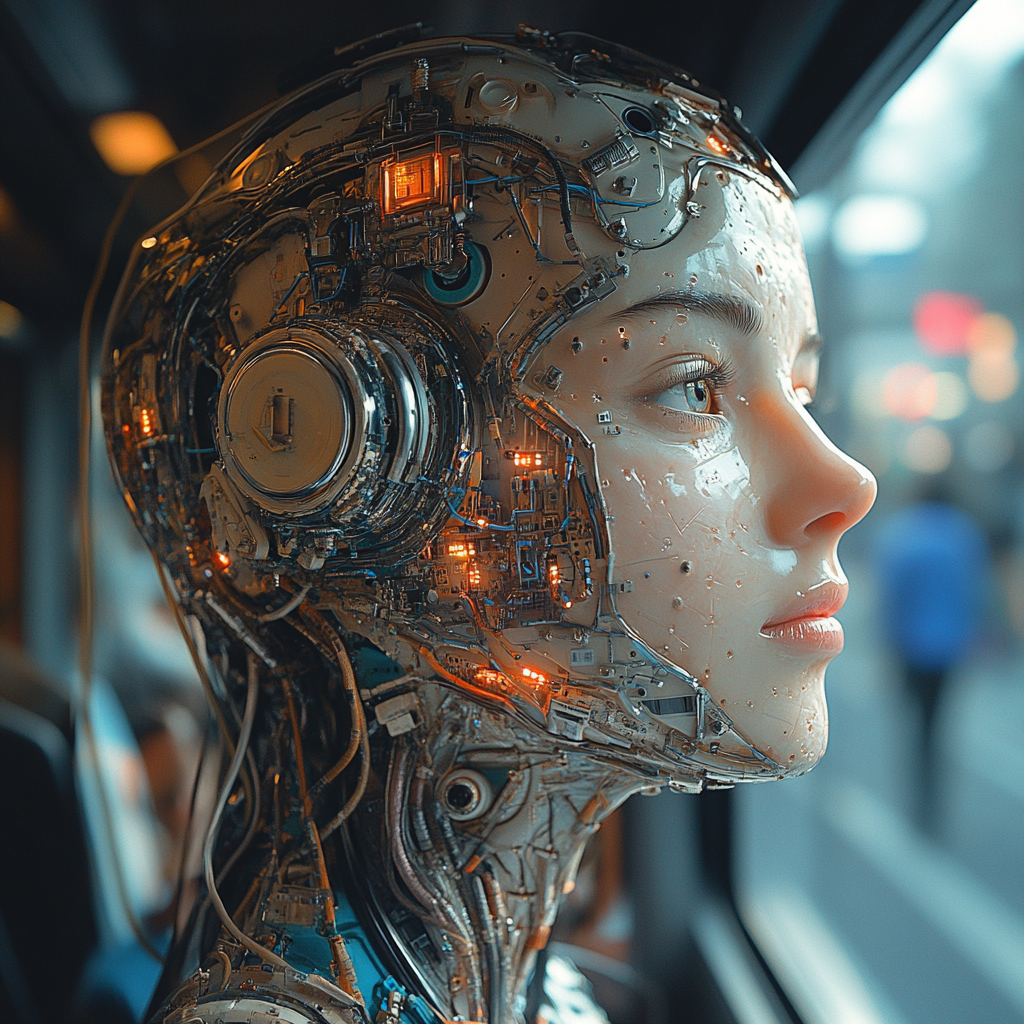
The migration of intelligence represents a moment of cosmological significance. It would be the point at which a tiny fraction of the universe’s matter, having achieved self-awareness through the slow and precarious process of biological evolution, transfers that consciousness to a more durable, scalable, and potent medium. This is the dawn of evolution: the moment when the universe, through its own evolved creations, truly begins to “wake up,” with the potential to saturate the cosmos with intelligence and forever transcend the limitations of time and space that defined it.