

A Light That Does Not Go Out
Ephemeral Installation
“A Light That Does Not Go Out” is part of the practice of ephemeral art in public spaces, understanding the ephemeral not as something minor or disposable, but as an intensely present act, deeply anchored in shared experience and in the here and now of the community. The work is based on the ancestral gesture of lighting a candle—an intimate, ritual, affective action—to propose a collective and symbolic vigil in defense of what remains: the memory of the neighborhood, its living identity, and its capacity to resist the processes of urban transformation that attempt to dilute its uniqueness.
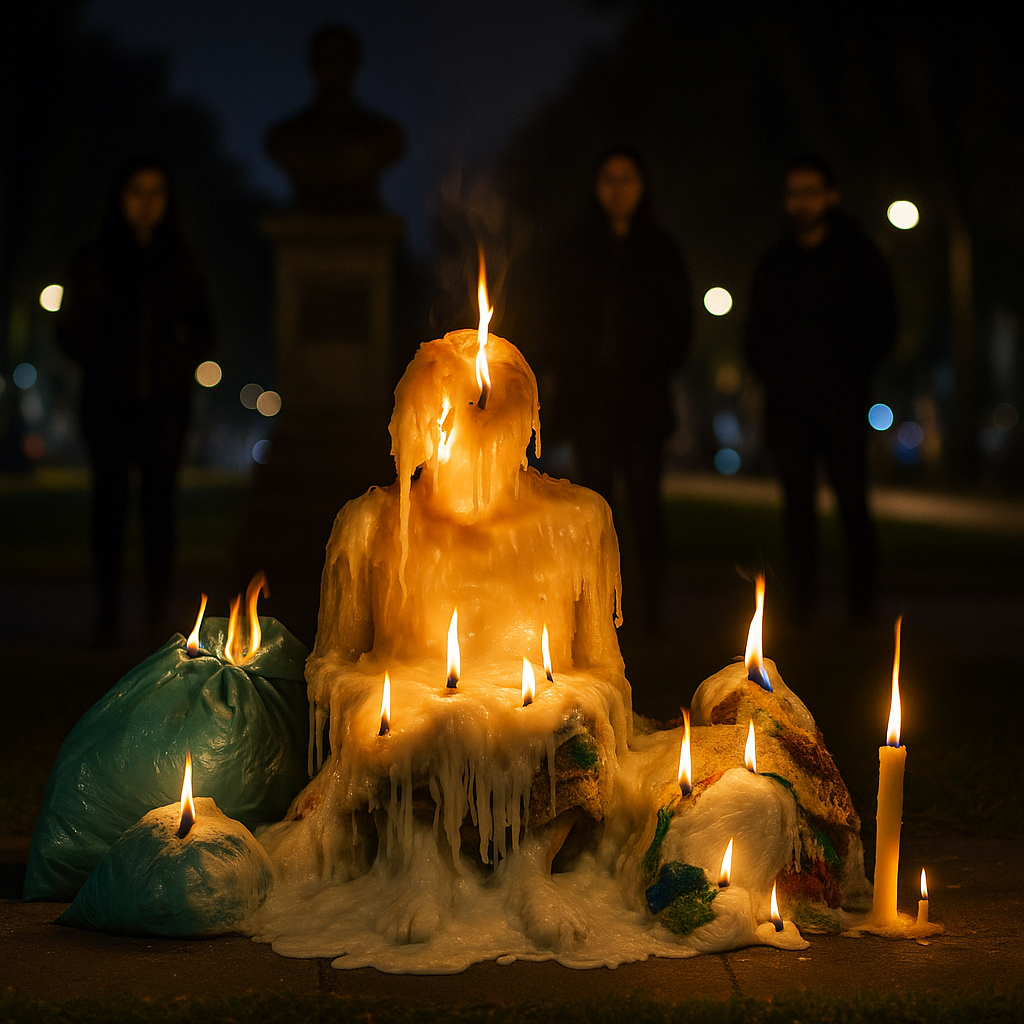
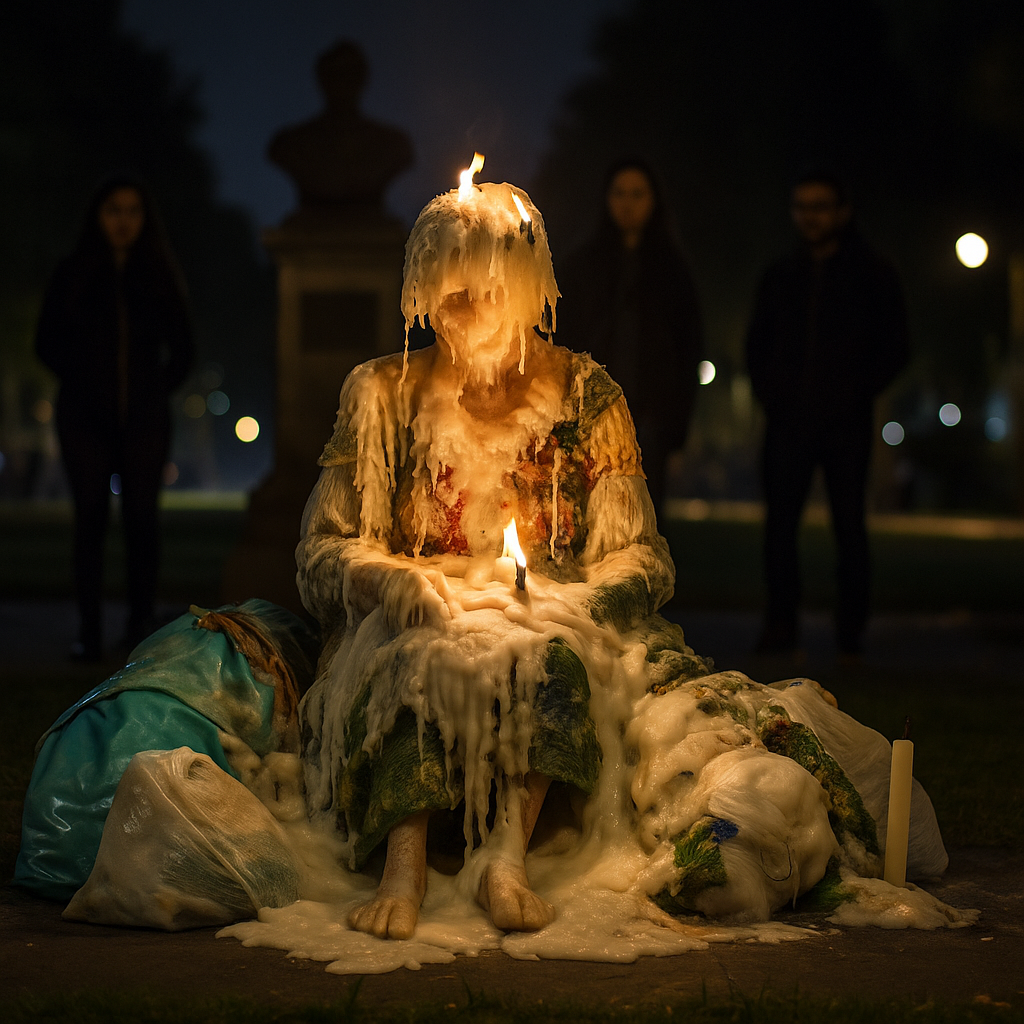
Fire, as a transformative and sacred agent, activates the monumental paraffin sculpture and reveals an essential paradox: what is materially consumed remains symbolically alight. The heat of this flame is not only physical: it is the energy of voices, memories, and affections that refuse to disappear. The work thus becomes a community invocation, a poetic gesture that radiates memory in the face of oblivion, affection in the face of displacement, desire in the face of the logic of spatial homogenization imposed by gentrification.
Located in the Parkway—a green and cultural corridor that has historically been a meeting point and now experiences a tension between the communal and the commercial—the installation proposes a symbolic reappropriation of public space. Set against the monumental stone of the Almirante Padilla, this lit candle stands as an ephemeral monument to the everyday, to that which is not included in official history but shapes neighborhood life: conversations on the sidewalk, family trees, names that do not appear on maps.
The temporality of the work—which begins with its lighting and culminates in its disappearance—makes time itself an aesthetic component, where transformation, fragility, and disappearance are integral parts of the discourse. As in the practices of Land Art, environmental art, and urban performance, the work does not seek to remain an object, but rather to persist as an experience, as a shared memory that inhabits the body, memory, and narrative.
Thus, “A Light That Does Not Go Out” is not just a work to behold: it is an act to be inhabited, a flame to be shared, a ritual to remember that there are territories where resistance is ignited with fire, but burns with meaning.
A Light That Does Not Go Out
– Ephemeral Art Installation
What is the name of the installation?
A Light That Does Not Go Out
What is the central concept or question that motivates this work? How do we resist the symbolic disappearance of neighborhood life?
The work proposes a reflection on memory, territorial identity, and community affectivity in changing urban contexts. It uses fire as a symbol of poetic resistance to oblivion and transforms an intimate ritual gesture (lighting a candle) into a collective act of neighborhood vigil.
Where will the installation take place?
Bogotá, Teusaquillo neighborhood
Admiral Padilla Monument Plaza
Parkway, green and cultural corridor
What type of materials will you use?
Paraffin (biodegradable)
Recycled internal structure
Controlled combustible elements
Organic materials (optional for base or poetic context)
How does the work relate to the public space in which it is located?
The installation redefines a space charged with historical and everyday tensions: the Parkway. Against the patriotic monumentality of the monument, an ephemeral candle stands as a counter-monument that exalts the neighborhood, the emotional, and the community. It reactivates the space as a place of encounter, memory, and shared care.
What will be the duration or life cycle of the work?
One night.
It is activated and consumed during the Night of the Candles (December 7), following the combustion cycle of paraffin. Its duration depends on the size, wind, and weather conditions.
How is it expected to disappear or transform?
Through controlled combustion.
The fire slowly transforms the sculpture until it disappears. The weather can alter the rhythm of the process. The work is transformed into light, smoke, and memory.
What kind of interaction will there be with the public?
Participatory, ritual, and contemplative.
The community will be able to write wishes or memories linked to the neighborhood, participate in the collective lighting, and share a symbolic space of vigil and reflection.
Is there an environmental, political, or social message you want to convey?
Yes.
The work poses a symbolic resistance to the gentrification of the Parkway and the loss of neighborhood identity. It celebrates the affective memory of the neighborhood and activates a poetic critique of the displacement of the common. It also promotes an ecological perspective in the choice of ephemeral and non-polluting materials.
How will this work be documented or recorded?
Audiovisual recording (photography and video)
Sound archive of audience testimonies
Written and poetic documentation
Digital publication as a memory of the ephemeral gesture
Curatorial Text
A Light That Does Not Go Out
Ephemeral Installation in Public Space – Teusaquillo, Bogotá
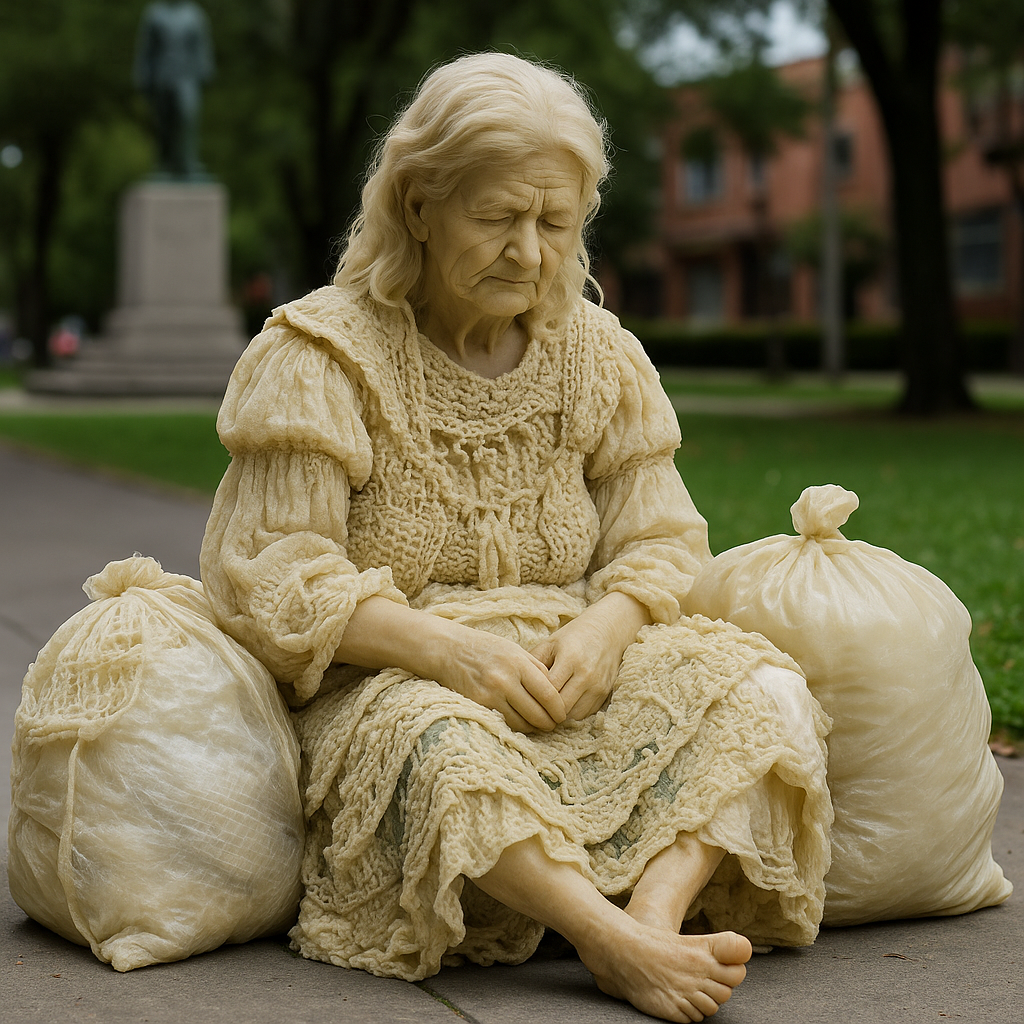
In the heart of Teusaquillo, where the Parkway has become a disputed territory between the intimate and the commercial, a figure made of paraffin will rise for one night: the burning portrait of María Soledad, woven in flame and memory.
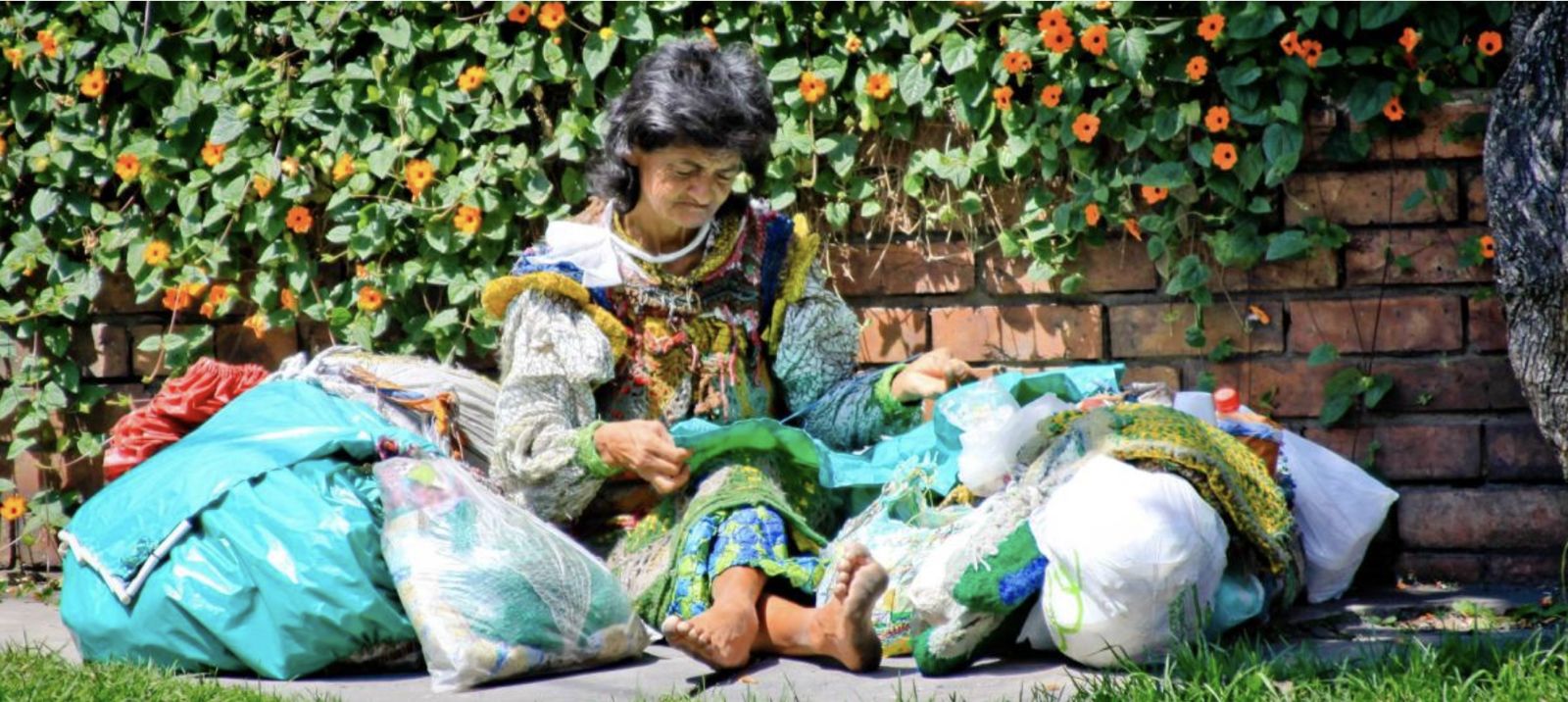
Known to some as Gloria Bohórquez, María Soledad is a woman who has walked the streets of the neighborhood barefoot for years, wrapped in layers of dresses made by her own hands from plastic bags, threads, wool, and spiraling stories. Her mere presence is an aesthetic, political, and mystical act. In her overflowing words—“of this life here unwrapped and enveloping again…”—ancient voices reverberate, echoes of uprooted roots, and visions of a world that doesn’t fit the logic of modernization.
“A Light That Does Not Go Out” is an ephemeral installation that remembers her without appropriating her, that summons her without turning her into a silent symbol. It is a hyperrealistic and sensitive paraffin sculpture that reproduces her figure on the threshold of the December 7th celebration: the Night of the Candles. There, in front of the monument to Admiral Padilla, her burning body will hold a vigil that is not only ritual: it is political. Because what burns is not only the sculpture, but the question of what is disappearing—neighborhood memories, invisible lives, undomesticated forms of living.
The fire, which traditionally illuminates family altars, here activates a memory that has not been told by official history. María Soledad represents a way of being in the world that makes progress uncomfortable: a body that resists shoes, an aesthetic woven from discarded materials, a language that folds in on itself like an unfinished song. Her figure, ephemeral and fiery, will rise for one night as a monument to the tender disobedience of that which insists on existing outside the norm.
The installation is not just a sculptural work: it is an act of symbolic care. A collective lighting, a shared contemplation, a fire that transforms without erasing. And when the sculpture melts, what will remain will be the imprint of the wax, the memory of a figure and the echo of a voice that will continue to resonate:
“of life, of family, of awakening, of mornings…”
Because there are lives that burn without going out.
Because there are presences that do not disappear.
Because there are lights that do not go out.